
Havana in 3 days: classic cars, mojitos and a city that wins you over despite everything
— / 10
(0 ratings)
 ES
 EN

Havana
⛰️ ALTITUDE
59 m
📅 BEST SEASON
November to April
🗣️ LANGUAGE
Spanish
💉 VACCINES & PREVENTION
Yellow fever and hepatitis A vaccination are recommended. Some countries in the region require a yellow fever certificate if arriving from a risk area — check with a travel health clinic.
My opinion in one sentence. Havana is neither a comfortable nor an easy city, but it is one of those that stay with you. It was founded in 1519 and today has more than two million inhabitants; its historic centre, Old Havana, and its fortifications have been a UNESCO World Heritage Site since 1982. What I liked most is that every street looks like a film set: peeling colourful facades, wrought-iron balconies, cars from the 1950s and music coming out of every doorway. What I liked least is that almost everything takes patience, cash and a bit of improvisation. This blog mixes what I saw with what I think of each place, so you can decide whether it suits you.
How I would organise the three days. My suggestion: the first day, Old Havana on foot, with its squares, its bars and the harbour; the second, the Capitolio area and Centro Habana, with the Partagas tobacco factory and a walk along the streets with arcades; the third, the La Cabana fortress on the other side of the bay, with the nine o'clock cannon shot in the evening, and the Plaza de la Revolucion. In between, a ride in a classic car is almost a must, although it is best to agree the price before getting in. The city is big and hot, so split your plans between morning and afternoon and take a break at midday.
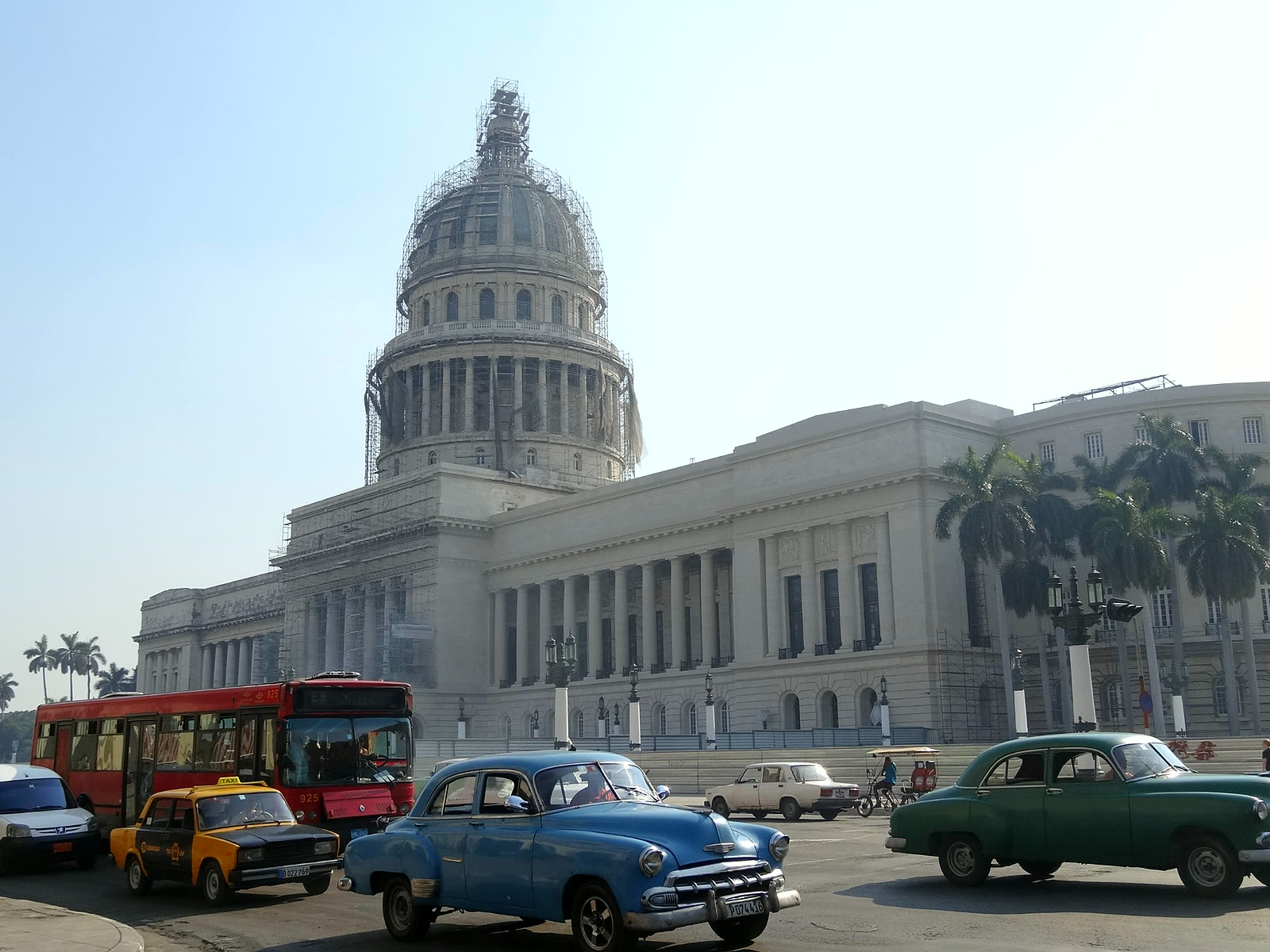
The Capitolio. It is the building that best sums up the city: a dome reminiscent of the Capitol in Washington and the Pantheon in Paris, built between 1926 and 1929, which housed the Congress until 1959. The photo shows the dome covered in scaffolding, because I visited during its long restoration; even so you can tell its size, about 90 metres high, and the contrast with the cars passing in front: a blue Chevrolet, a green one, a Lada taxi and a red bus. My opinion: it is worth seeing from the street and, if you find the visit open, going in to see the great hall and the diamond under the dome, which marks kilometre zero of the roads of Cuba.
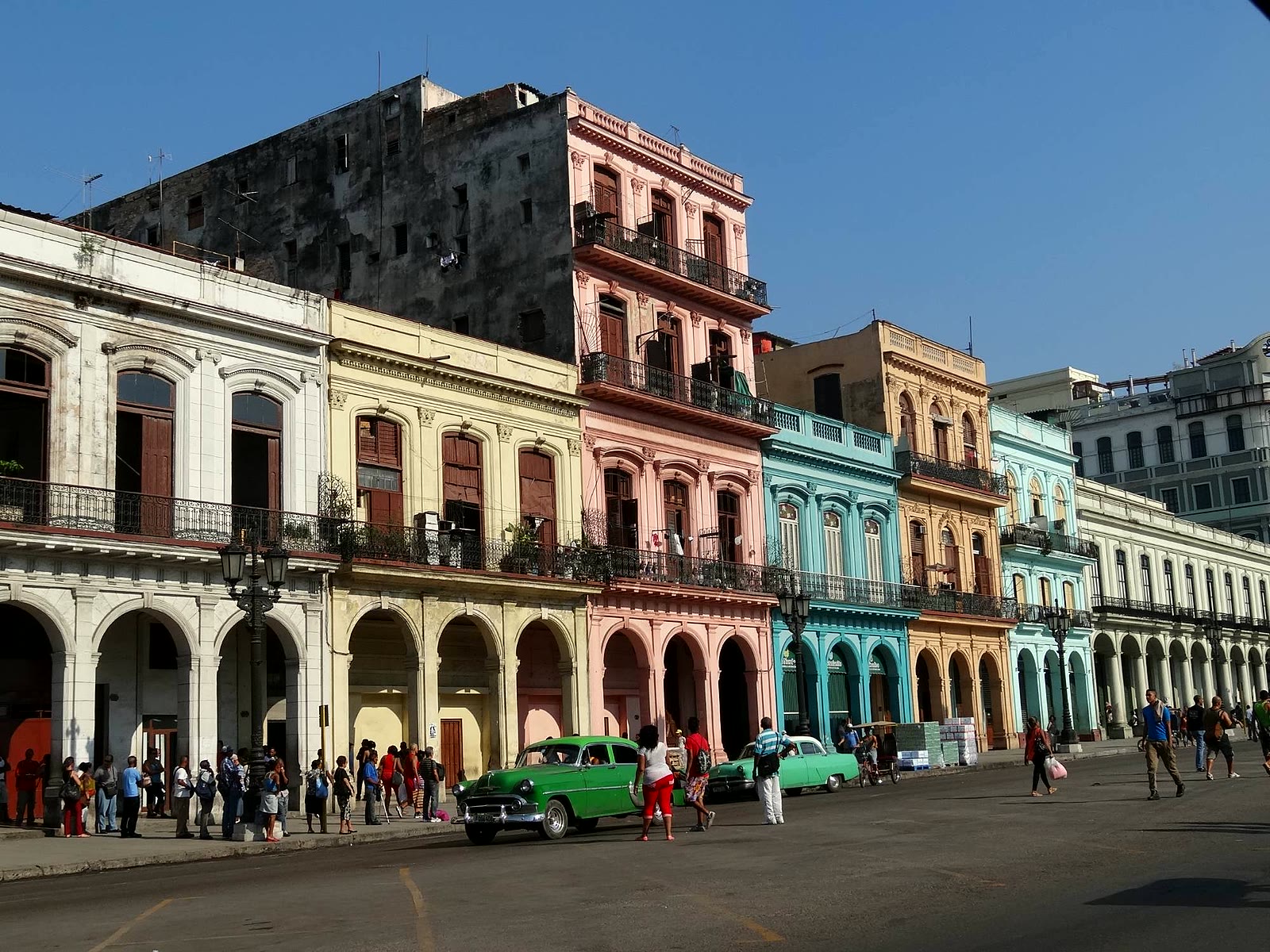
Colourful streets and arcades. Next to the Capitolio begins Centro Habana, and for me this is the essence of the city: a row of several-storey houses with arcades, wrought-iron balconies and facades painted pink, turquoise and yellow, some restored and others right next to them in very poor condition. That mix of beauty and neglect is what makes Havana so photogenic, and also what made me think the most: behind every facade there are people living, with queues on the pavement to buy things and washing hanging from the balconies. My advice is to walk without hurry, look up and, if you photograph people, ask permission first.
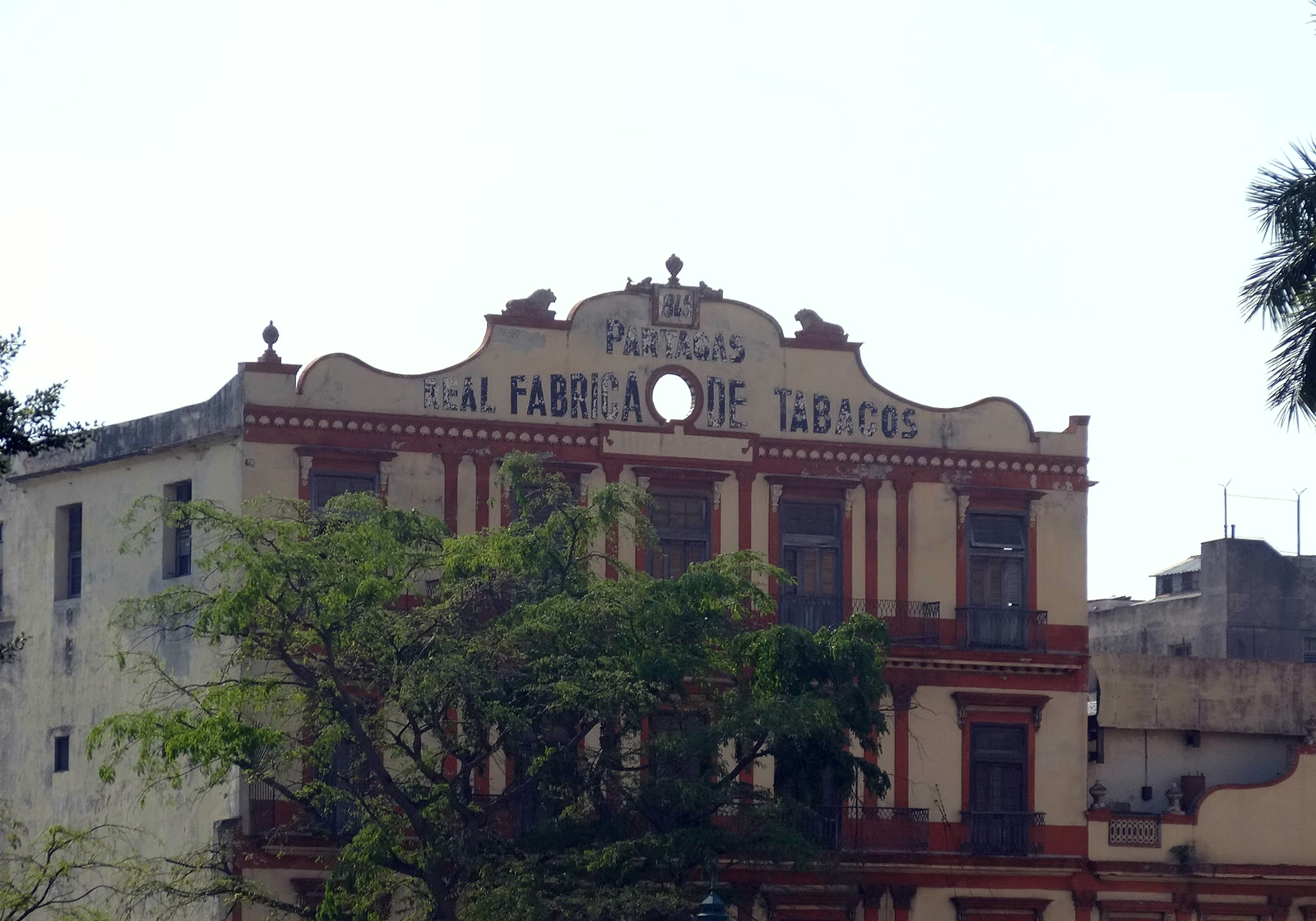
The Partagas tobacco factory. Behind the Capitolio stands this building with the sign "Real Fabrica de Tabacos Partagas", founded in 1845 and still working. The facade, with its lions and its large circular window, is one of the most recognisable in the area. Inside you can take guided tours to see how cigars are rolled by hand, although photos of the interior are usually forbidden. If you are going to buy tobacco, do it in official shops or at the factory itself: on the street they will offer you very cheap boxes that are almost always fake or of poor quality.
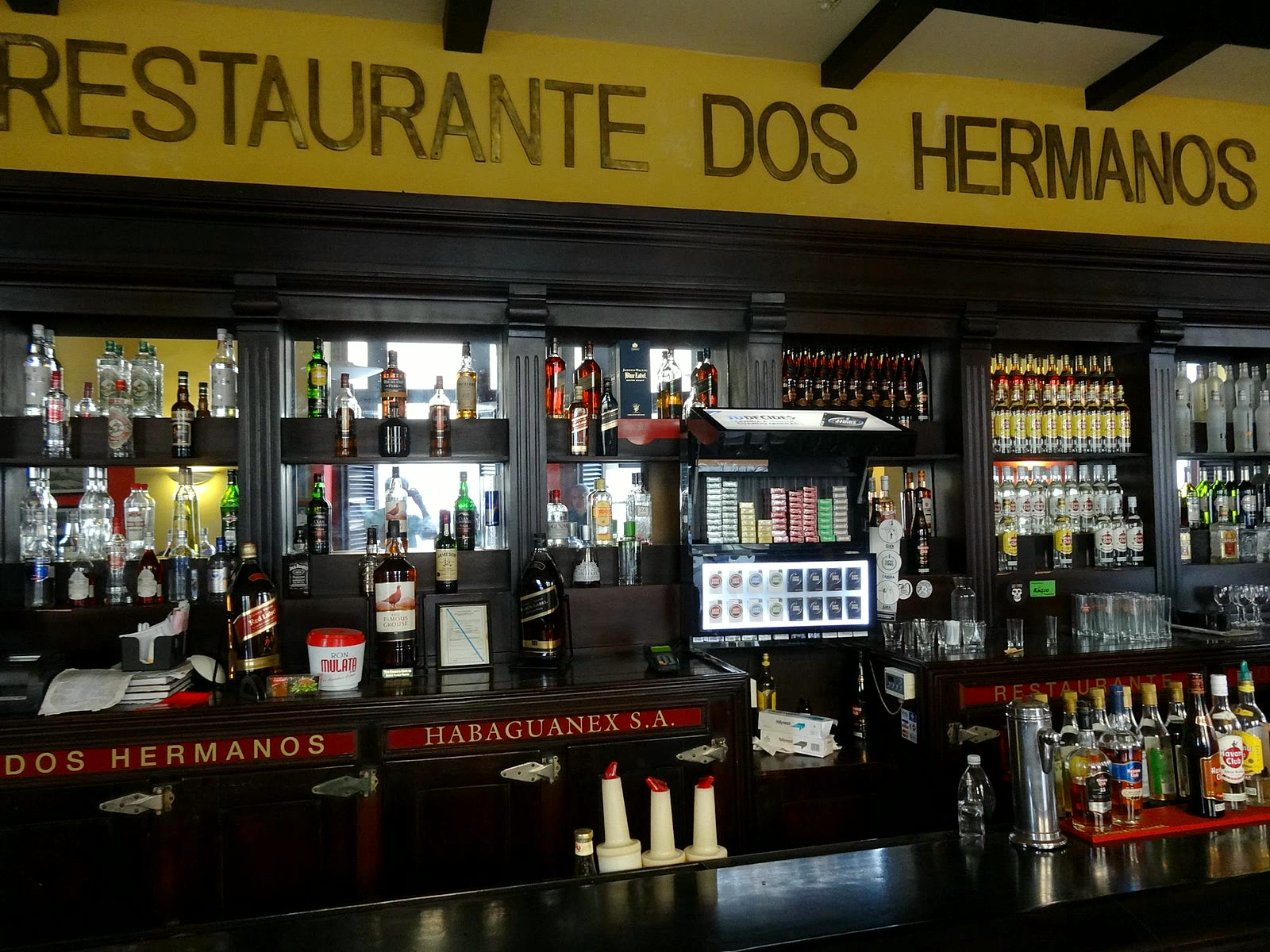
The Dos Hermanos bar. Facing the harbour, on Avenida del Puerto, is this bar-restaurant that, according to the story, has been open since 1894 and was once frequented by writers such as Federico Garcia Lorca and Ernest Hemingway. I loved the dark wooden bar with its shelves full of bottles: here rum is the star, with bottles of Havana Club taking up half a wall. The signs on the bar read Habaguanex S.A., the former tourist company of the Office of the City Historian, which ran many venues in Old Havana. It is a good place to sit down and rest with a daiquiri and watch the comings and goings of the bay.
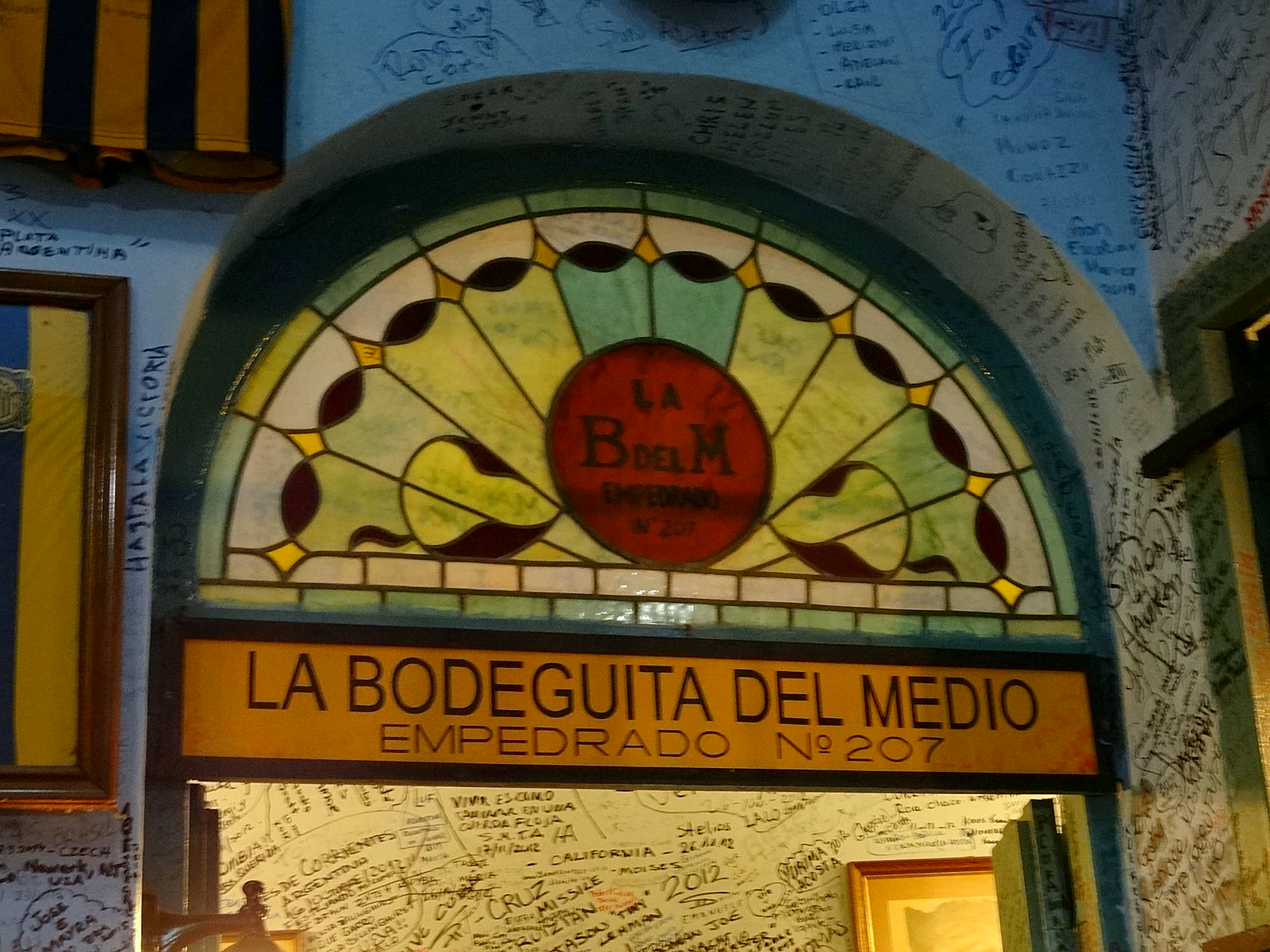
La Bodeguita del Medio. It is on Empedrado street, number 207, and for many travellers it is the cradle of the mojito. It started in the 1940s as a small grocery store and became famous for the signatures and phrases that customers write on its walls, which now cover every centimetre, including the arch with the stained glass of the "B del M". Hemingway is credited with the phrase "my mojito in La Bodeguita", although that quote is disputed. My honest opinion: it is packed with tourists and the mojito is not the best I had, but you should go in once for the atmosphere, the live music and to leave your signature on the wall if they let you.
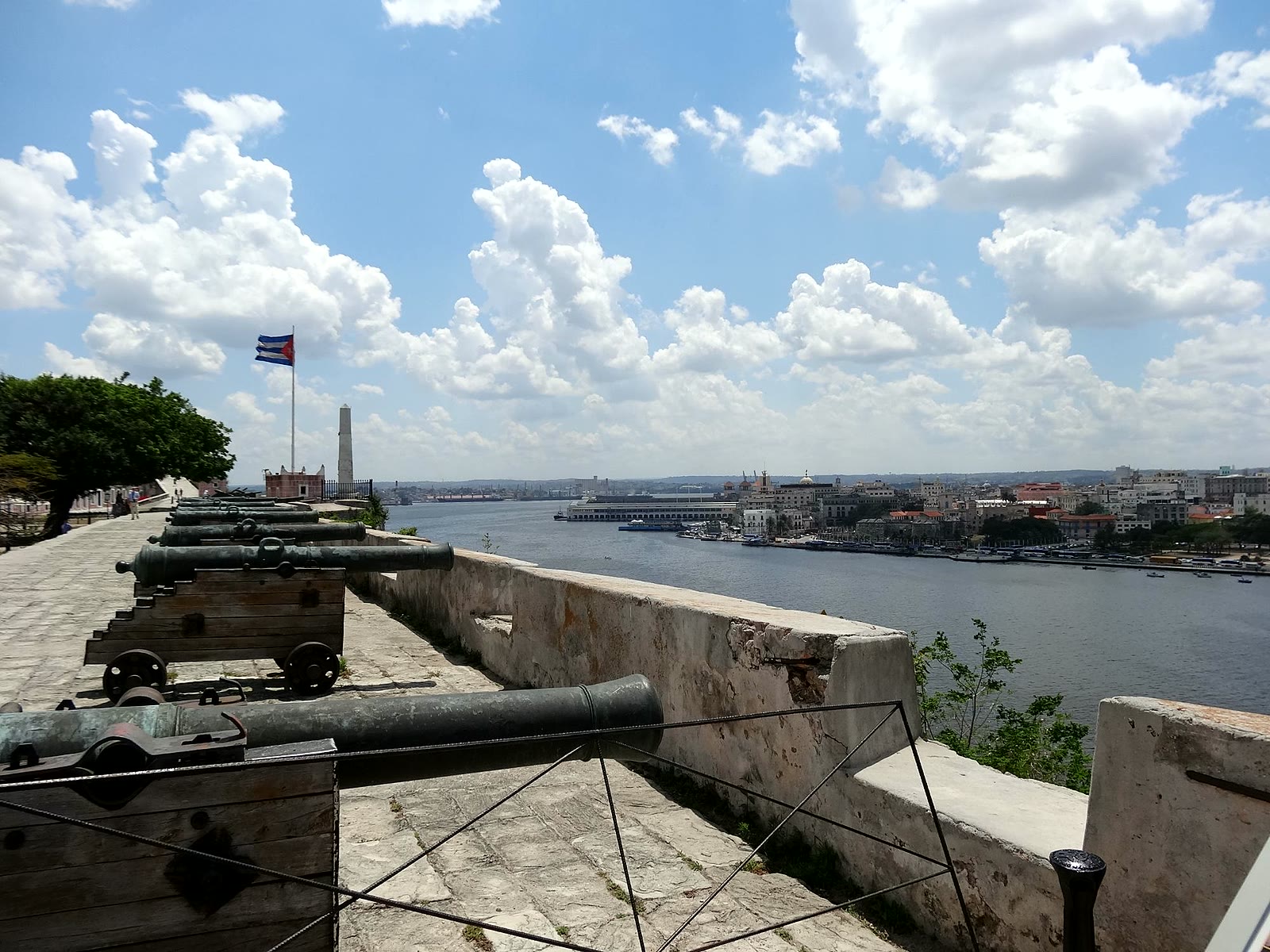
The La Cabana fortress. On the other side of the bay, the Fortress of San Carlos de la Cabana was built between 1763 and 1774, after the British took Havana in 1762, and it is one of the largest Spanish fortresses in the Americas. From its wall, with the cannons pointing at the sea, you can see all of Old Havana across the water, with the cruise terminal in the foreground. Right there, every night at nine, the cannon ceremony takes place, a tradition that dates from the time when the shot announced the closing of the city gates. For me it is the best viewpoint in the city, and you get there by taxi, through the tunnel under the bay.
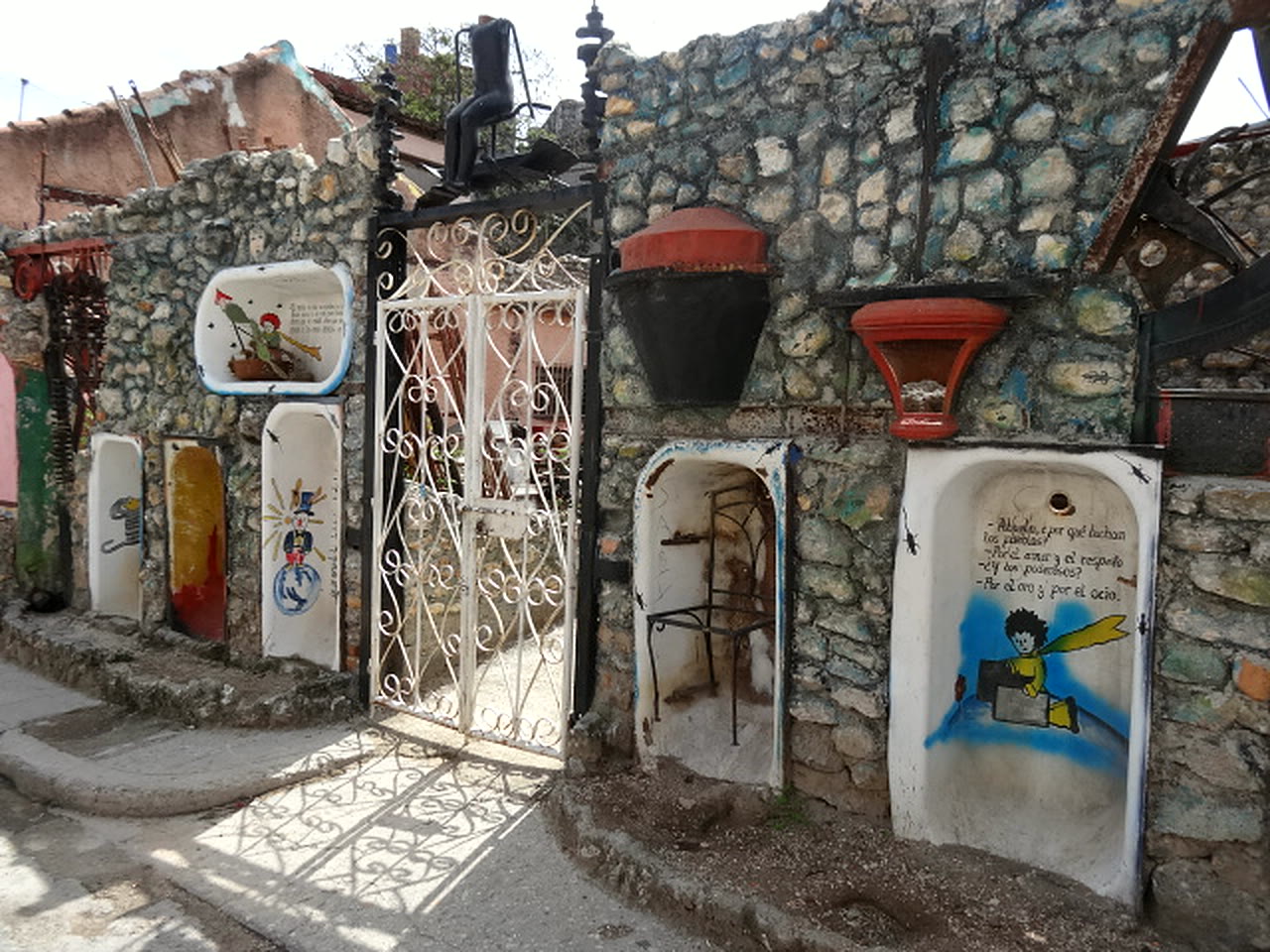
Street art. One of the things that surprised me most is how much art takes over the walls: murals, mosaics and corners decorated by the neighbours. In this photo, a stone wall with a white wrought-iron gate has bathtub-shaped niches painted with scenes from The Little Prince. They are small, improvised and free places, and for me they are as interesting as the monuments because they show the creativity of the people. If you see an open gate with art, go in respectfully and leave a tip if someone is looking after it.
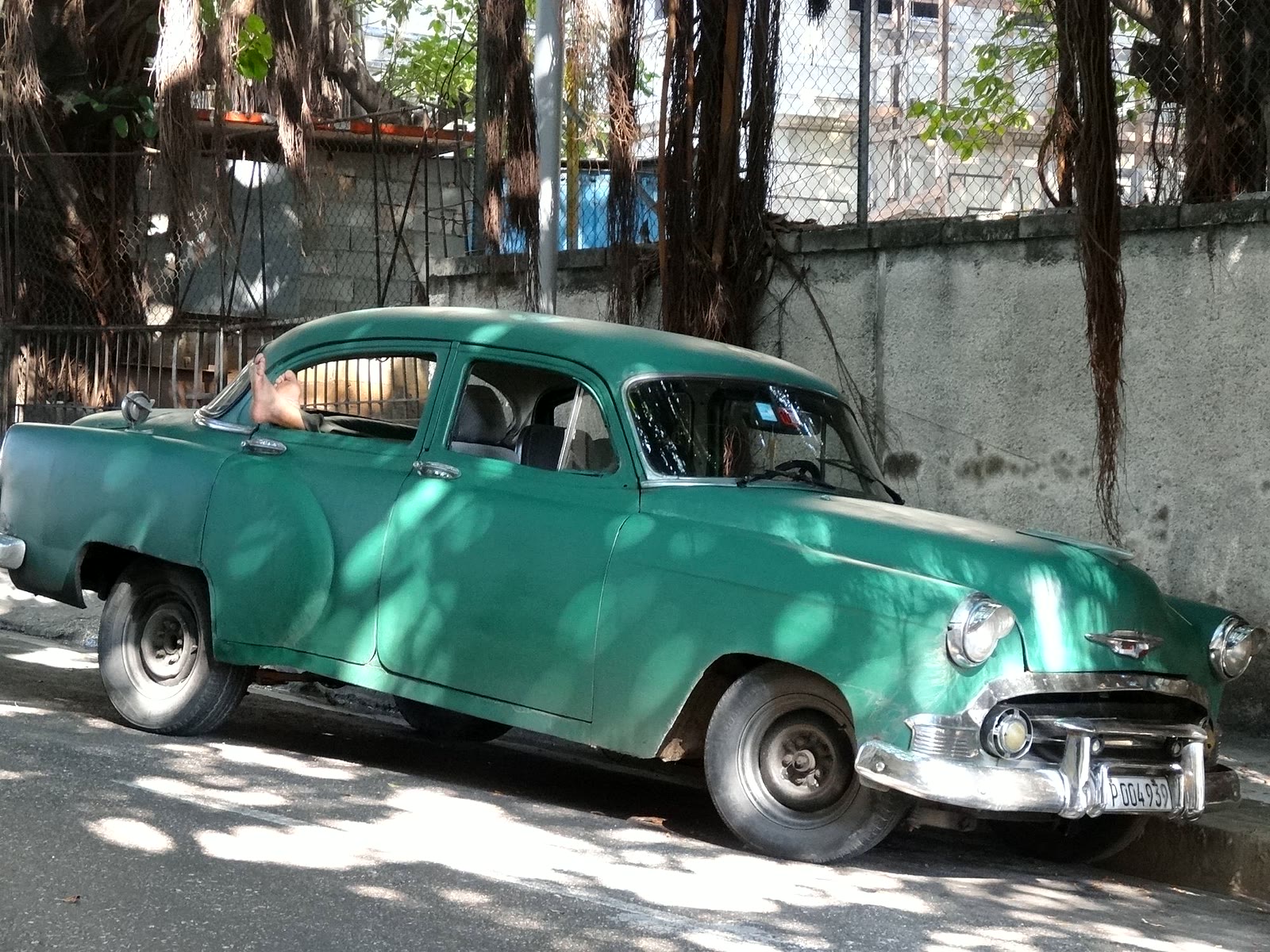
The classic cars. They are the first thing anyone imagines when thinking of Havana, and it is true that they are everywhere: Chevrolets, Fords and Buicks from the 1950s that have been kept running for decades with improvised spare parts, because importing cars was very difficult from the 1960s onwards. Today many work as taxis, the famous almendrones. This photo is my favourite for one reason: a driver takes a nap with his feet out of the window of his green Chevrolet, in the shade of enormous aerial roots. To me it is the best image of the city: no rush at all. My advice is to take a ride in one along the Malecon, but agree the price and the duration before getting in.
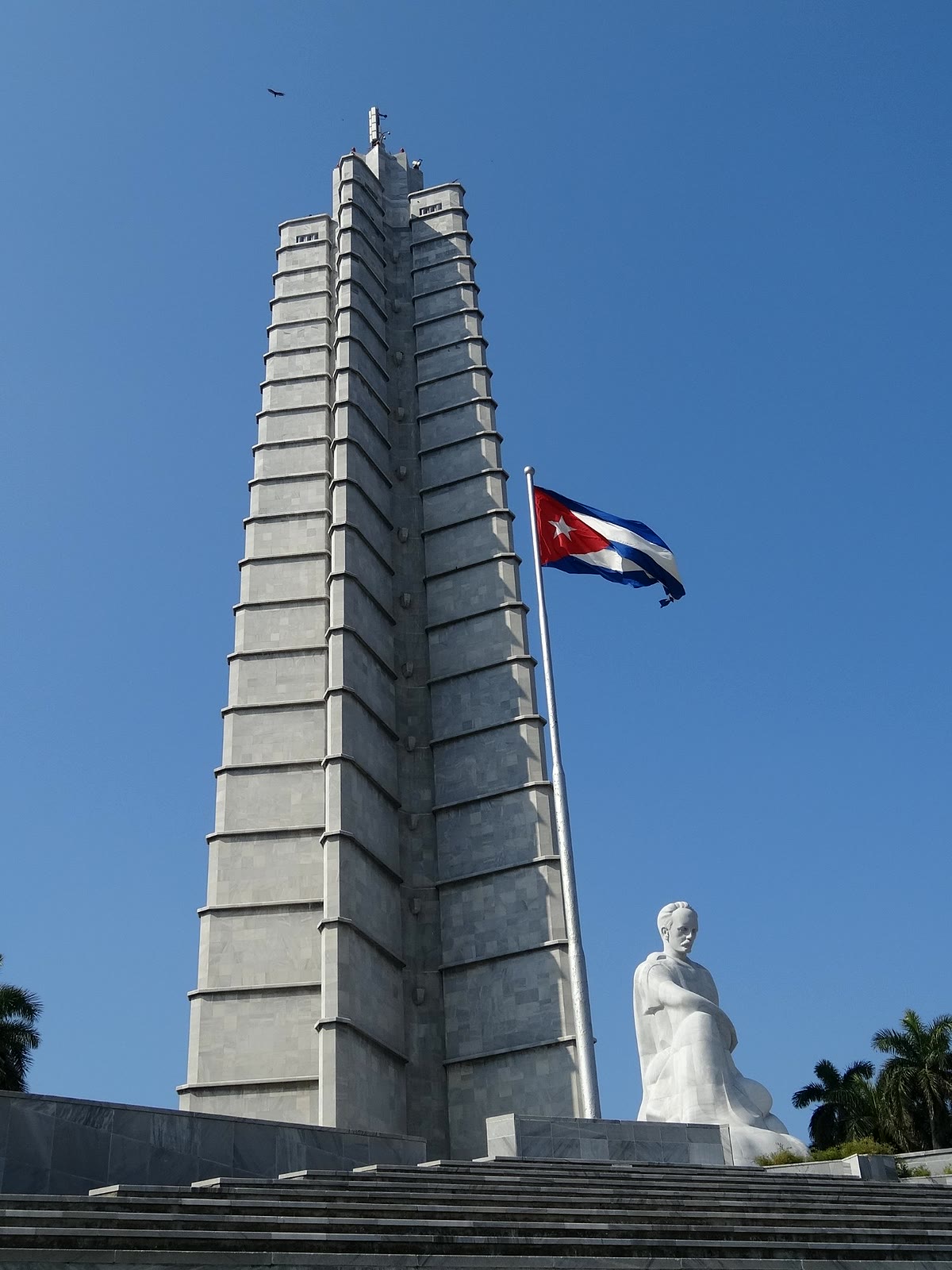
The Plaza de la Revolucion and the Jose Marti memorial. It is the great esplanade of the city and you recognise it by the tower of the Jose Marti Memorial, about 109 metres high, opened in 1958, with a white marble statue of the independence hero at its foot. Marti (1853-1895) was a poet, a journalist and the great Cuban symbol, and his figure is present throughout the country. The tower has a viewing platform at the top from which you can see the whole city. Around the square are the buildings of several ministries, with the well-known steel portraits on their facades. It is a very open place with no shade: go early or at the end of the afternoon and bring water and a hat.
What to eat and drink. In Havana rum comes first: the mojito (rum, mint, sugar, lime and soda), the daiquiri and the rum and cola with Havana Club. For food, the classic dishes are ropa vieja (shredded beef stewed with tomato), moros y cristianos (rice with black beans), tostones and cassava with mojo. My opinion is that, in general, the paladares, which are private restaurants set up in family homes, offer better food and service than many tourist restaurants in the centre, although it is best to book and check the reviews first. And do not miss a Cuban coffee, short and very sweet.
The best and the worst, in my view. The best: the architecture, the music on every corner, the people, who are friendly and talkative, and the feeling of being in a city stopped in another era. The worst: the shortage of many basic things, the limited internet connection, the heat and humidity, the condition of many buildings and the jineteros, people who approach you in the street to offer taxis, restaurants or cigars. You can travel well and enjoy it a lot, but you have to go expecting that not everything works as at home and willing to adapt.
Practical tips. (1) Before travelling, check the current entry requirements: you need a passport, the tourist card or a visa depending on your nationality, travel insurance with medical cover and, for some years now, an online customs form (D'Viajeros); always check the official website. (2) Bring enough cash for the whole trip, because you cannot always pay by card and those from some countries do not work; the monetary system has changed several times, so find out how to change money at official exchange offices. (3) Internet is scarce: it is used in wifi areas with connection cards and in some hotels, so download offline maps. (4) Agree the price of any taxi before getting in. (5) Bring sunscreen, repellent and any medicines you need, because they are not always available. (6) Ask permission before photographing people. (7) To travel safely, look after your bag in crowded areas, as in any big city.
Conclusion. Havana is a city you enjoy with all five senses and think about for weeks afterwards. There are real monuments, such as the Capitolio, La Cabana and the Marti memorial, and there are moments that appear in no guidebook, like the driver asleep in his green car. Three days are enough to see the essentials, but you are left wanting more. If you like cities with history, with character and unpolished, my recommendation is to go, with patience, curiosity and a good sense of humour.
Blog designed by
fedeurru
What do you think about the blog? Please rate it.
Havana in 3 days: classic cars, mojitos and a city that wins you over despite everything
La Habana
Why "Treep"?
Treep comes from the union of "Tree" and "Trip".
A tree grows deep roots while never stopping its upward, outward growth. That is how we think about travel: it is not just moving from one place to another, but also a journey back to our own roots, a way to reconnect with nature and with the people around us, and a path of personal growth that every trip leaves behind.
Treep was born to be part of that journey: a place to plan, share and keep the trips that help us grow, the same way a tree never stops reaching outward with its branches.