
Paris in 4 days: Notre-Dame, the Louvre, the Eiffel Tower, Montmartre and the Luxembourg Gardens
10.00 / 10
(1 rating)
 ES
 EN

Paris
⛰️ ALTITUDE
35 m
📅 BEST SEASON
April to June and September to October
🗣️ LANGUAGE
French
💉 VACCINES & PREVENTION
No mandatory vaccines are required for entry. Routine vaccines (MMR, tetanus-diphtheria) should be up to date; check with a travel health clinic before departure.
Why go to Paris. Paris was born more than two thousand years ago on an island in the Seine, the Île de la Cité, where the Gaulish tribe of the Parisii settled and, later, Roman Lutetia. Today it is one of the most visited cities in the world: about two million inhabitants in the city proper and more than ten million in its metropolitan area, spread over twenty districts (arrondissements) that coil outwards from the centre like a snail. Its monuments are known to everyone, but what people remember most is strolling along the banks of the Seine, a World Heritage Site, its gardens and its neighbourhoods. This guide covers the essentials in four days, with an explanation of each place and practical tips.
How to organise the four days. A proposal: on the first day, the Île de la Cité with Notre-Dame, the Latin Quarter and the Luxembourg Gardens; on the second, the Louvre in the morning, the Tuileries Garden and the Champs-Élysées up to the Arc de Triomphe; on the third, the Eiffel Tower, with a walk around the Trocadéro and the Champ de Mars, and Les Invalides; on the fourth, Montmartre and the Sacré-Cœur, with time to get lost in its streets. Most of the centre is covered on foot or by metro, and it is best to book the Louvre and Eiffel Tower tickets online so as not to lose hours in queues.
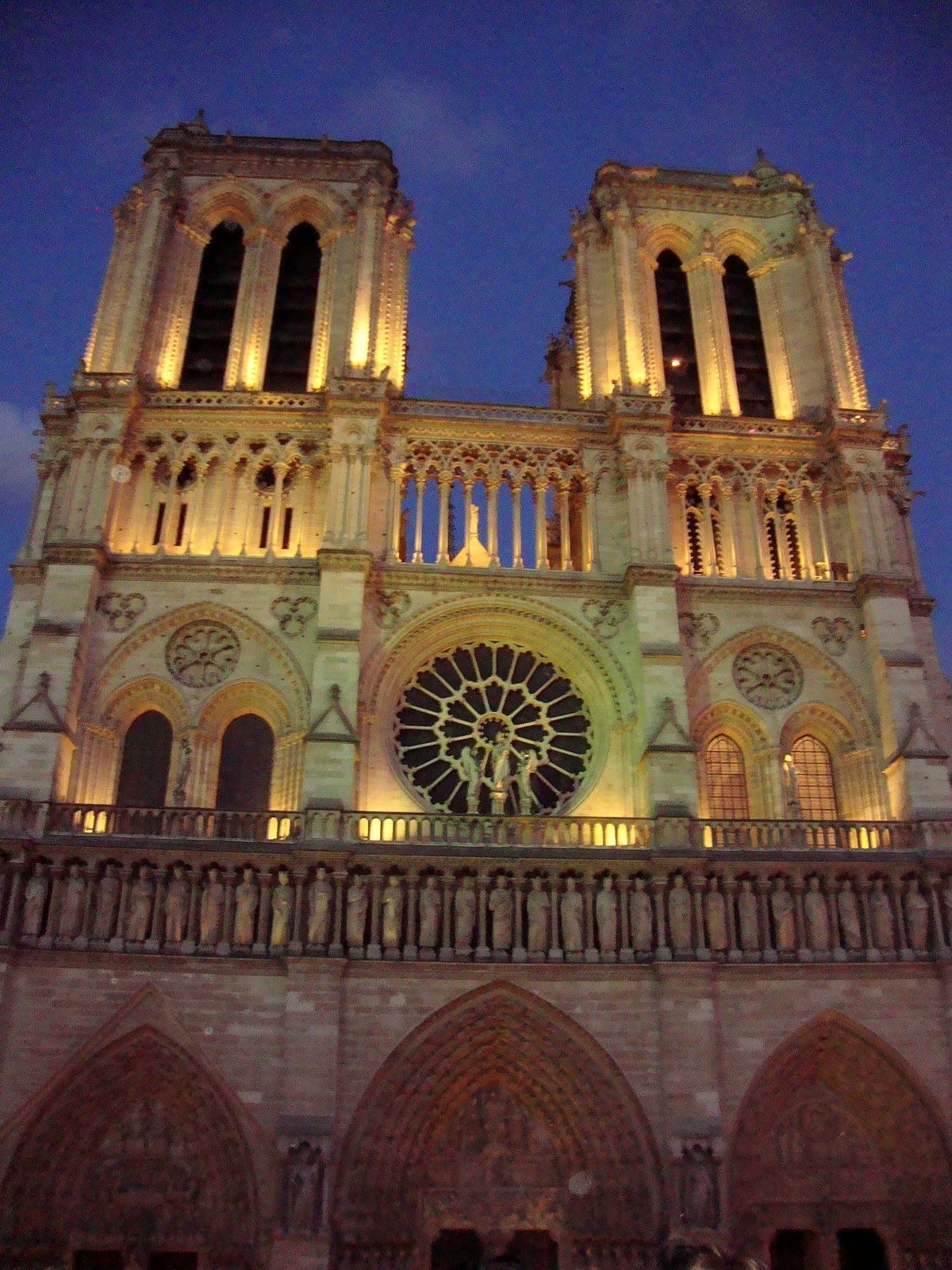
Notre-Dame and the Île de la Cité. Notre-Dame cathedral, in the heart of the island, is one of the great works of Gothic architecture: its construction began in 1163 and lasted almost two centuries. The west facade in the photo, with its two towers about 69 metres tall, the central rose window and the Gallery of Kings, with 28 statues, is one of the most recognisable images of Paris. The photo, taken at night, predates the fire of 15 April 2019, which destroyed the spire and a large part of the roof; after a long restoration, the cathedral reopened to the public in December 2024. Entry is free, and it is worth checking the official website to book a time slot and find out which parts are open. A few steps away are the Sainte-Chapelle, with its 13th-century stained glass, and the neighbouring Île Saint-Louis, famous for Berthillon ice cream.
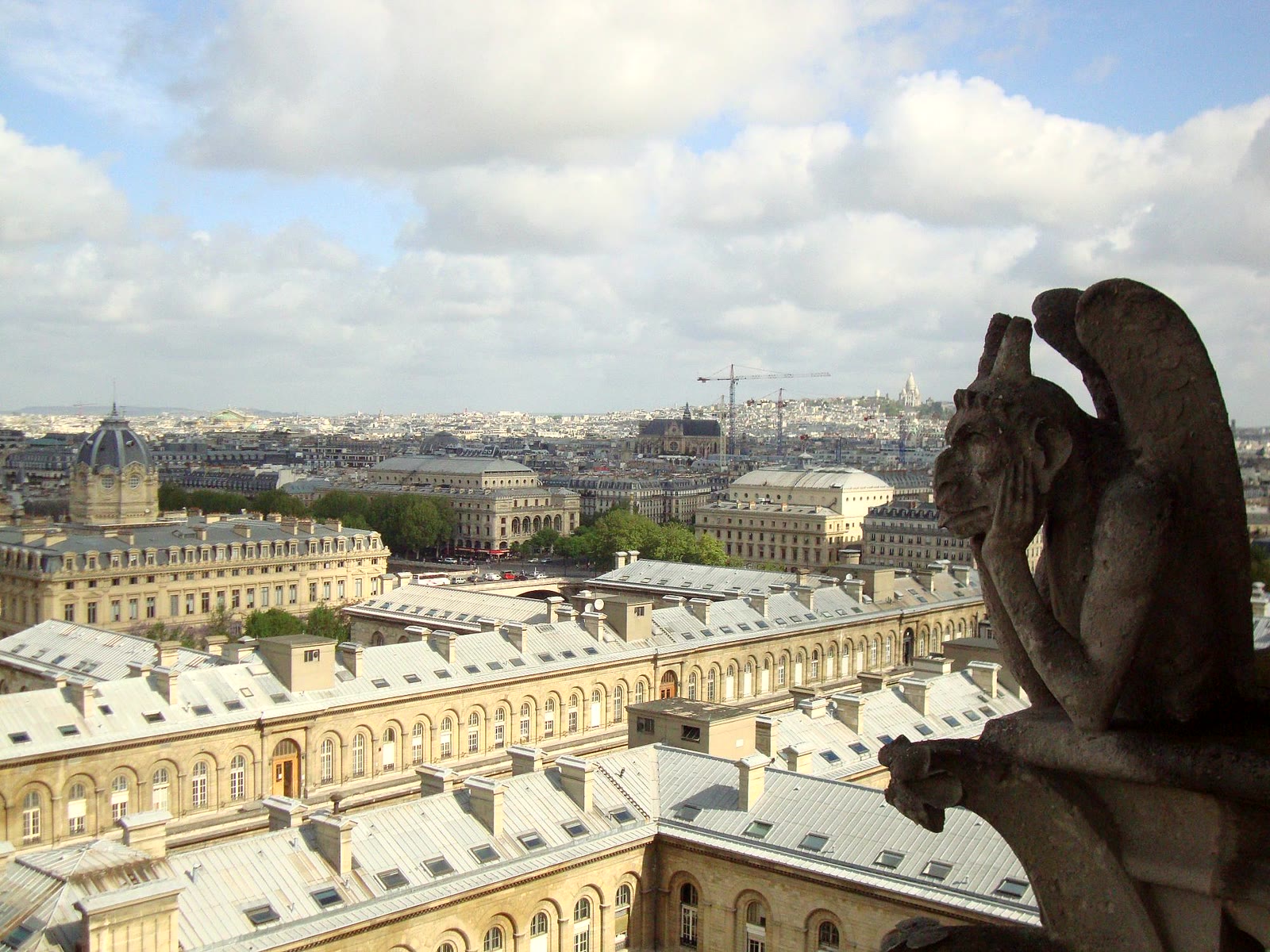
The chimeras and the views of Paris. From the towers of Notre-Dame you can see the zinc roofs of Paris, the Seine and, on the horizon, the hill of Montmartre with the Sacré-Cœur basilica. The figure in the photo is one of the chimeras of the upper gallery, fantastical sculptures added by Eugène Viollet-le-Duc in the 19th century, during the great restoration of the cathedral; technically they are not gargoyles, because they do not drain water, but ornaments. The most famous is the one resting its head in its hands, gazing at the city. The photos of the tower also predate the fire; access to the towers has been subject to restrictions since then, so before planning it, check the official website to see whether they can be visited. An alternative with views is to climb the dome of the Sacré-Cœur or the Montparnasse Tower.
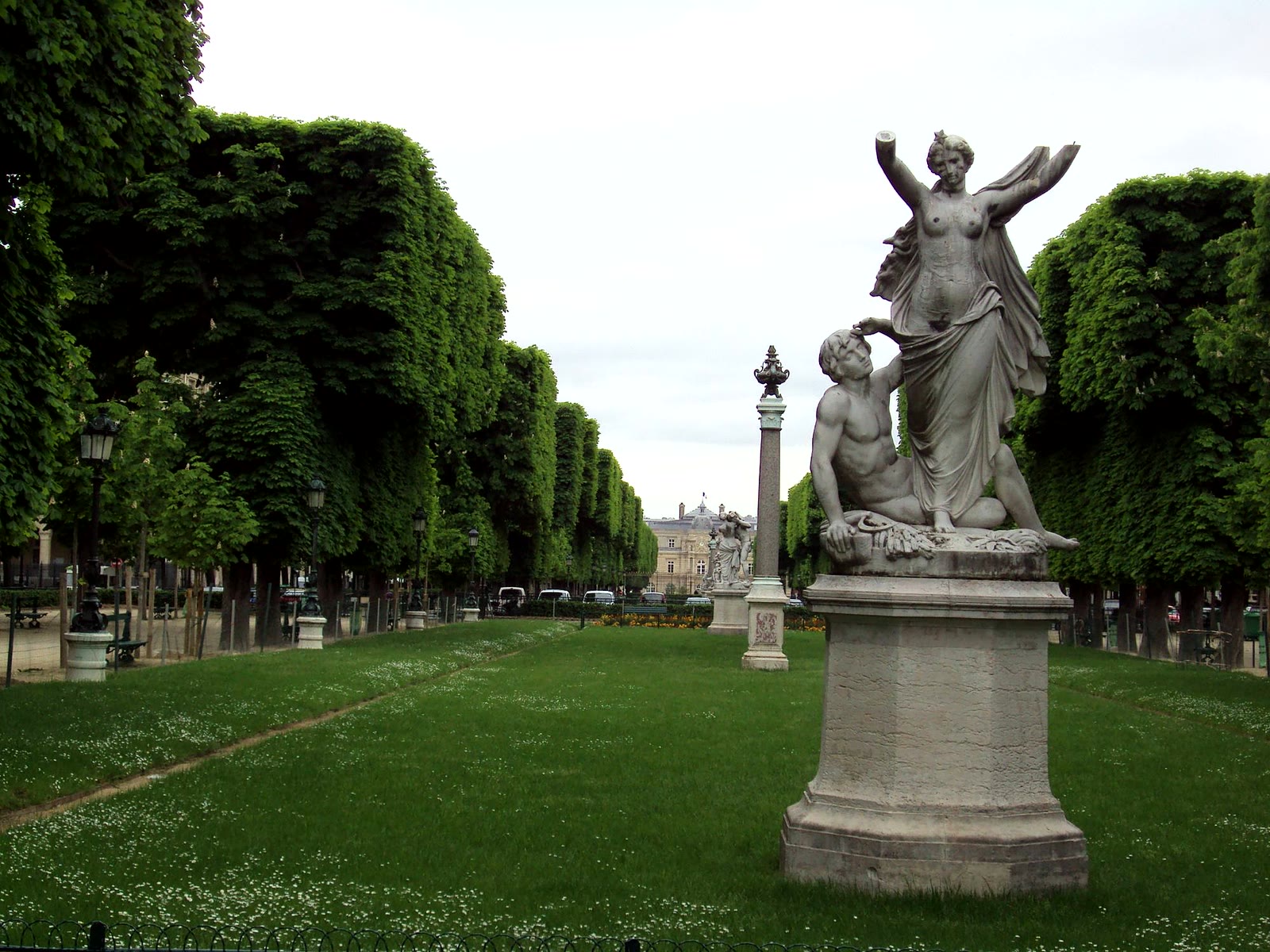
The Latin Quarter and the Luxembourg Gardens. South of the island lies the Latin Quarter, so called because in the Middle Ages the students of the Sorbonne spoke Latin: narrow streets, bookshops, cafés and the Sorbonne. A few minutes away are the Luxembourg Gardens, created in 1612 by Marie de Médici, regent of France, to surround her new palace, which is now the seat of the Senate and can be seen in the background of the photo. With about 23 hectares, it has avenues of precisely pruned trees, chestnuts among them, more than a hundred statues, a pond where children sail toy sailboats and the typical green metal chairs, which anyone can move and place wherever the sun is. Entry is free, and it is a good place to stop at midday with a picnic or a coffee.
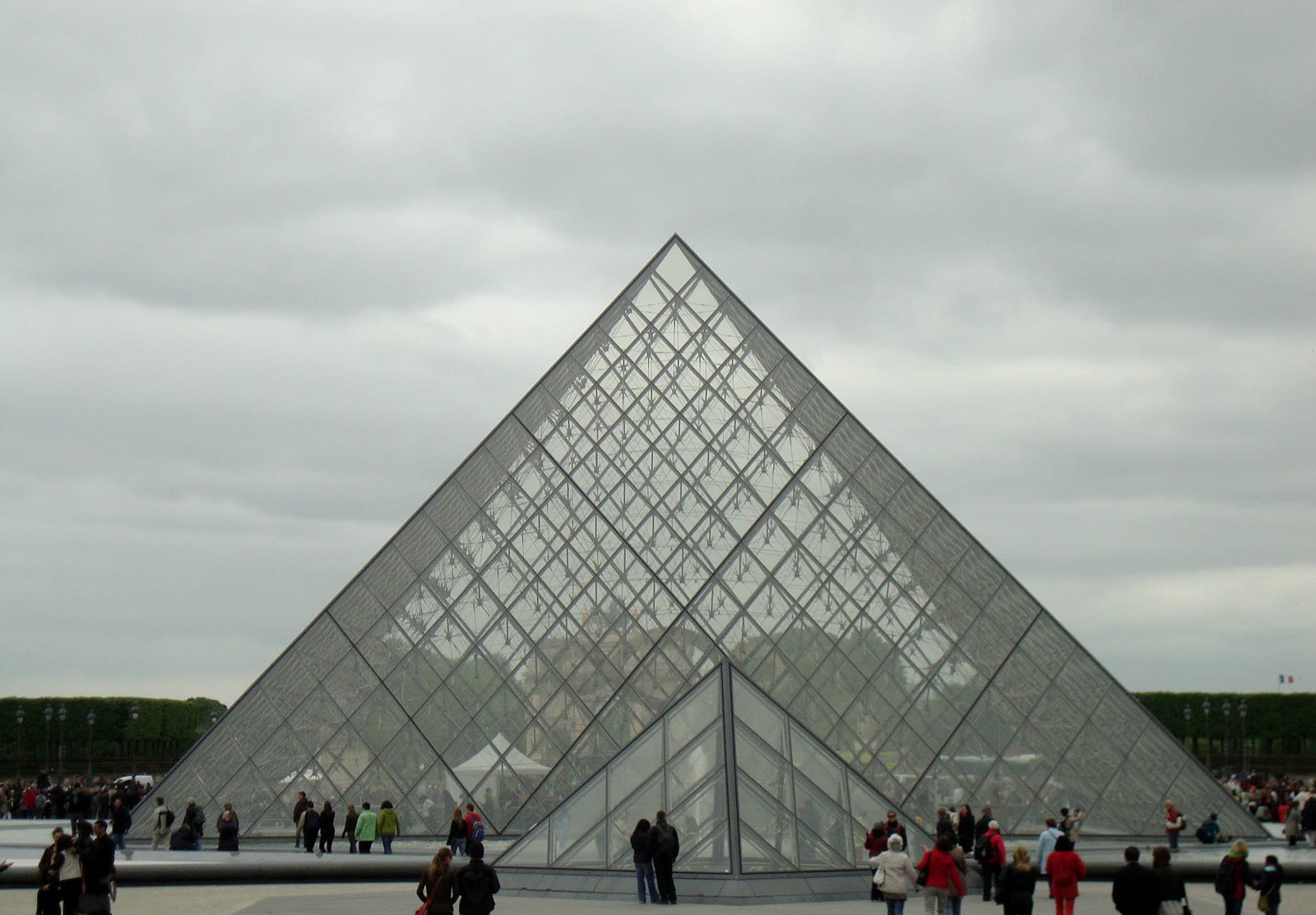
The Louvre and its pyramid. The Louvre was a medieval fortress and royal palace before opening as a museum in 1793, and today it is the most visited museum in the world. The glass pyramid in the photo, by the architect I. M. Pei, opened in 1989 as the new entrance to the museum, and at first caused strong controversy for contrasting with the classical building; today it is one of the symbols of the city. Beneath it is the hall that leads to the three wings of the museum. The collections are so large that they cannot be seen in full: the best approach is to choose a few works, such as the Mona Lisa, the Winged Victory of Samothrace or the Venus de Milo, and to book a timed ticket online. It is closed on Tuesdays and closes later on Fridays; check the opening times and conditions on the official website.
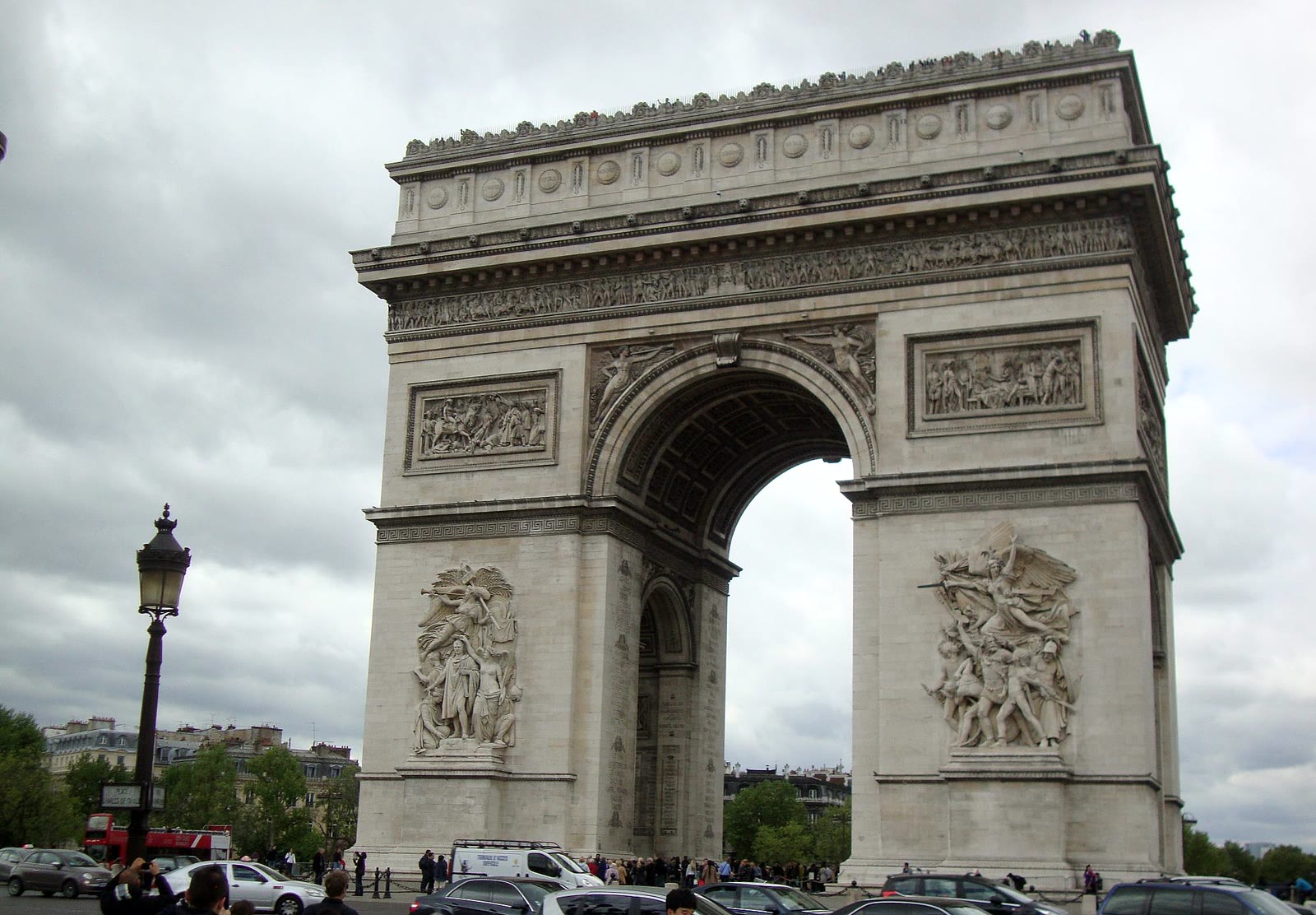
The Arc de Triomphe and the Champs-Élysées. Napoleon commissioned the Arc de Triomphe in 1806, after the victory at Austerlitz, but it was not finished until 1836. It is about 50 metres tall and stands in the centre of Place Charles de Gaulle, from which twelve avenues radiate like a star. In the photo you can see two of the great sculptural groups on the facade: “La Marseillaise” by François Rude, with the winged Liberty, and “The Triumph of 1810” by Jean-Pierre Cortot. Beneath the arch is the Tomb of the Unknown Soldier, with a flame that is rekindled every evening in a ceremony at 6:30 pm. To get there you do not have to cross the roundabout, where traffic is very heavy: you go in through an underground passage from the Champs-Élysées. From the terrace, reached by 284 steps, you can see the twelve avenues.
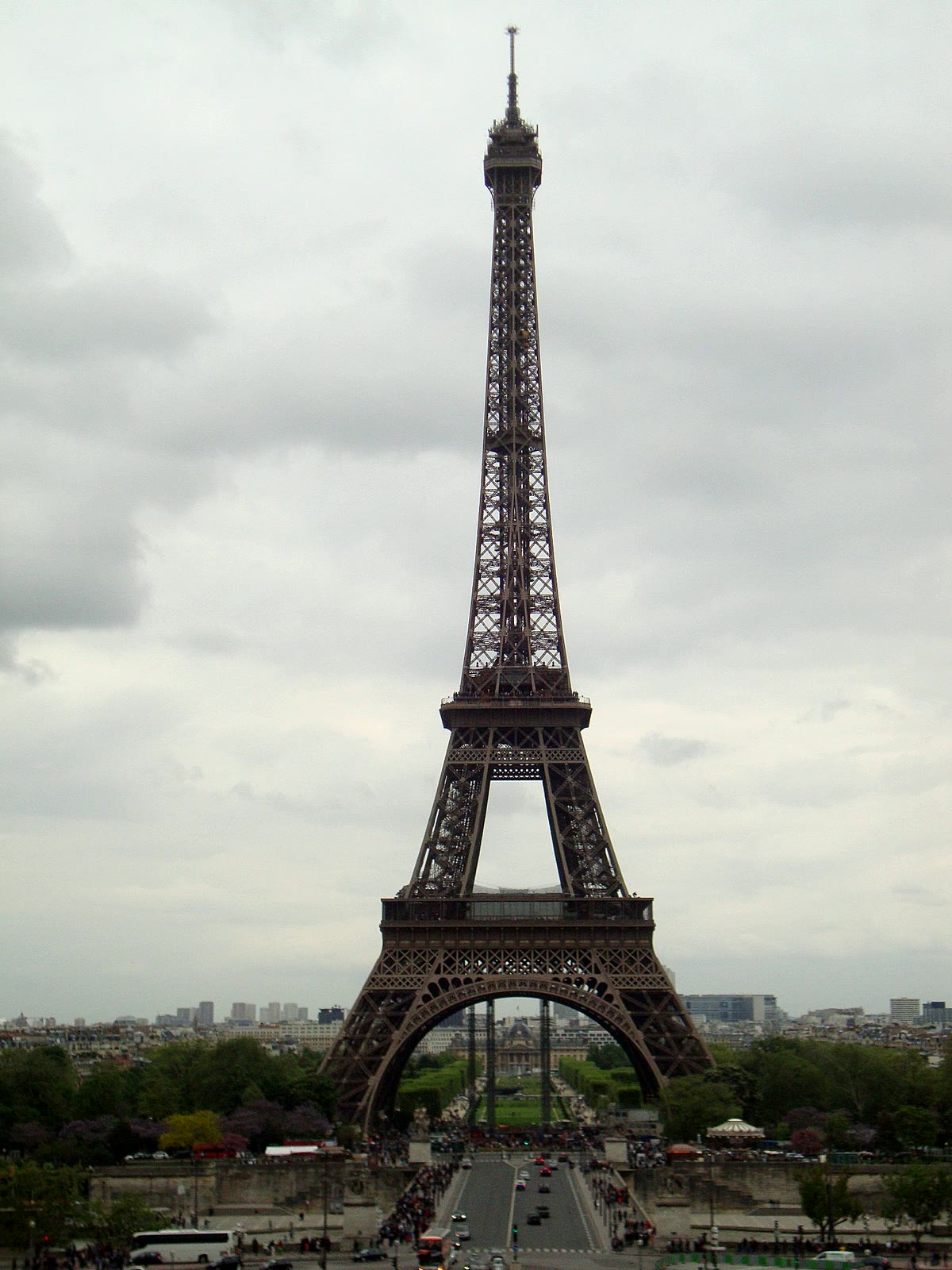
The Eiffel Tower. The tower was built for the 1889 World's Fair, which marked the centenary of the French Revolution, and was raised in just over two years by Gustave Eiffel's company. At first many artists criticised it and it was meant to be dismantled after twenty years, but its usefulness as an antenna saved it. Today it is about 330 metres tall and is fully repainted roughly every seven years. It has three levels: you can go up by lift to the top or, as far as the second floor, on foot, by about 670 steps. The photo was taken from the Trocadéro, the best head-on view, with the Champ de Mars and the École Militaire in the background. Book your ticket online, and stay at dusk: every hour on the hour a sparkle of lights is switched on for a few minutes.
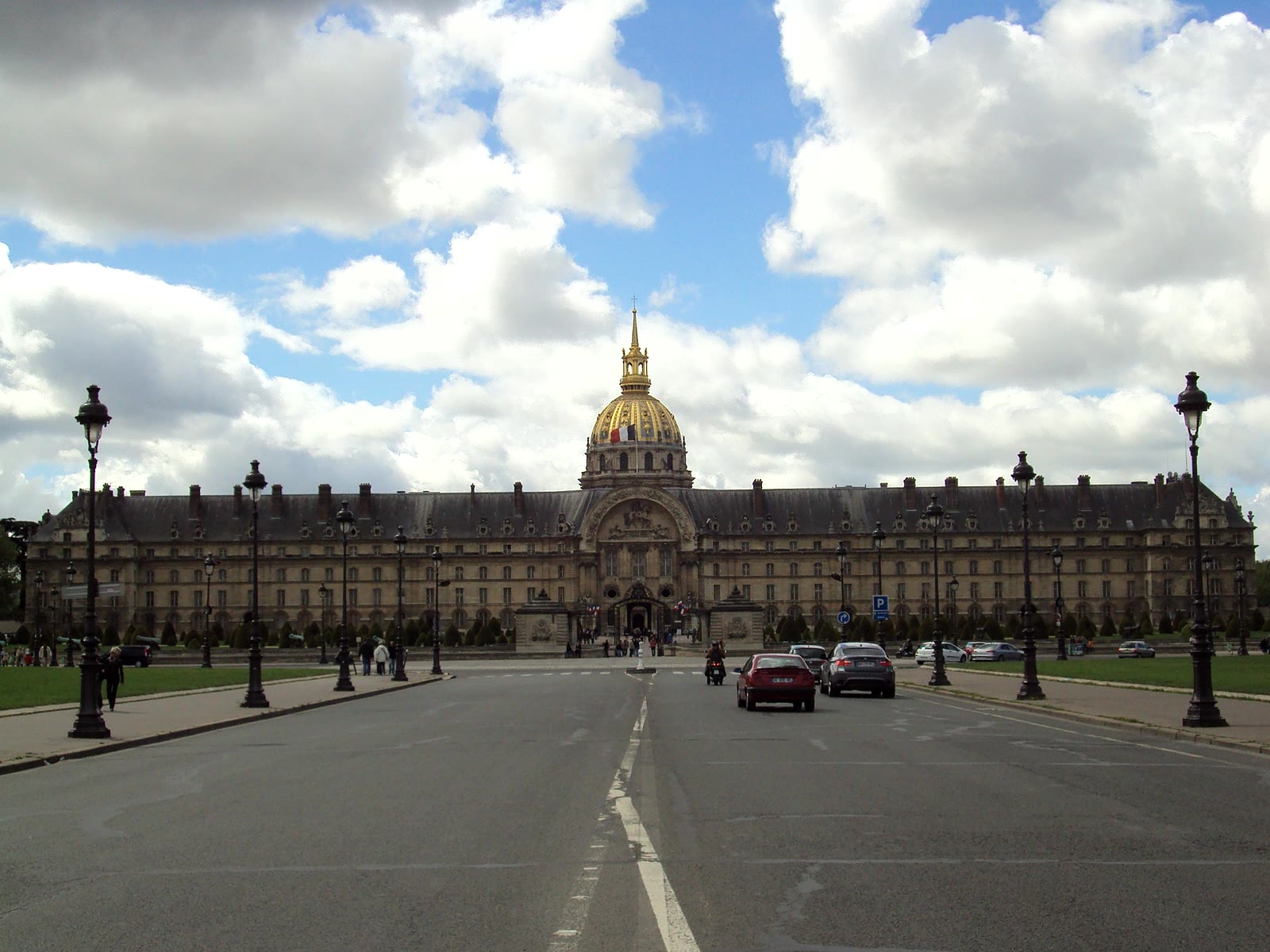
Les Invalides and the tomb of Napoleon. Louis XIV had Les Invalides built in 1670 as a hospital and home for veteran soldiers, and today the complex houses the Army Museum and the tomb of Napoleon. The gilded dome in the photo, designed by Jules Hardouin-Mansart and built between 1677 and 1706, covers the Dôme church, where Napoleon rests in a red quartzite sarcophagus, to which his remains were brought from Saint Helena in 1840. The esplanade in the foreground is a good place to stroll or sit in the sun. The museum is very complete for anyone interested in military history, with armour, weapons and mementos of the two world wars. Very close are the Rodin Museum, with The Thinker in its garden, and the Musée d'Orsay, across the Seine.
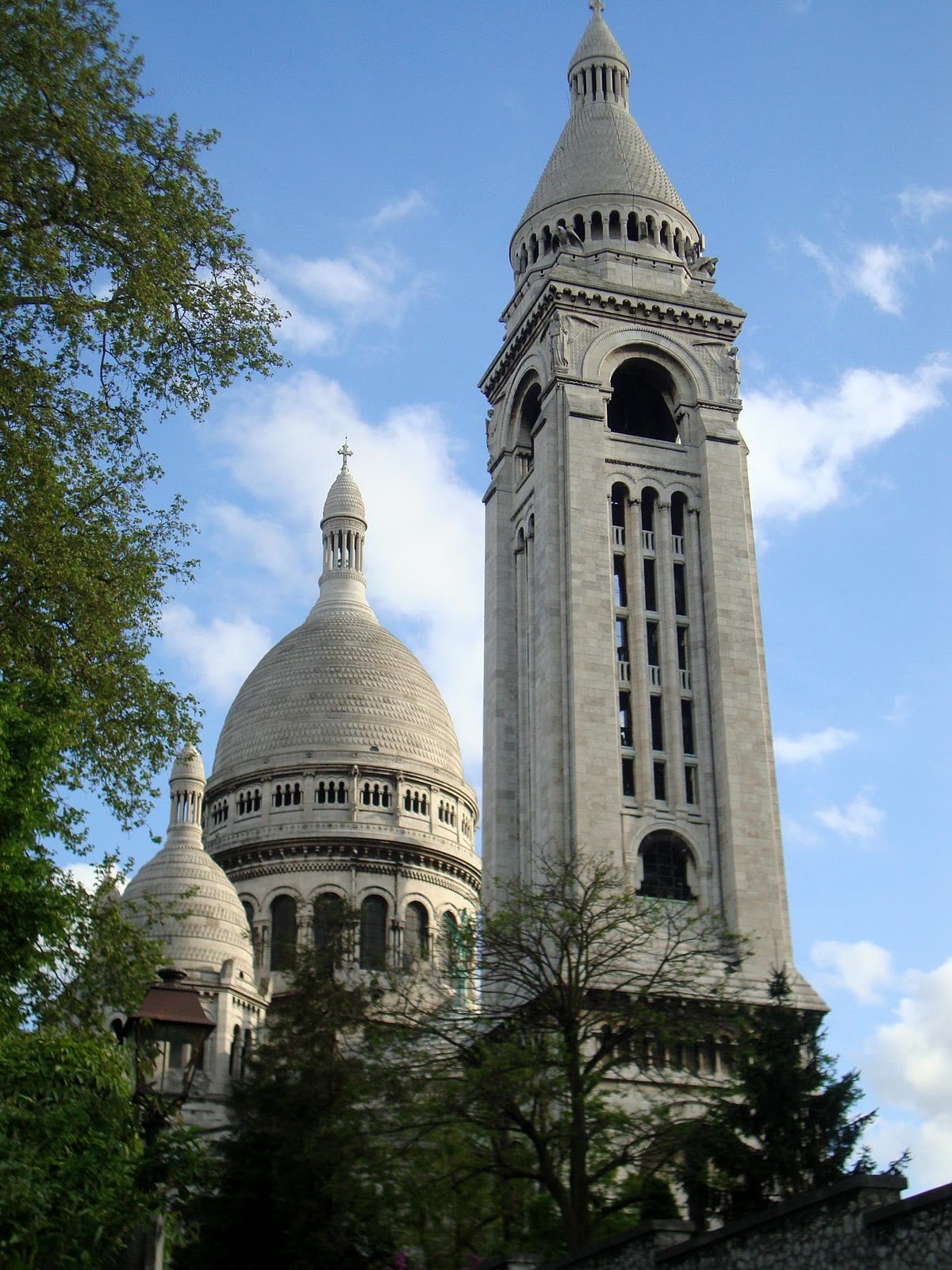
Montmartre and the Sacré-Cœur. Montmartre is a hill in the north of the city, the highest natural point in Paris, which was a village of vineyards and windmills and in the late 19th century became the artists' neighbourhood. The Sacré-Cœur basilica, in Romano-Byzantine style, was built between 1875 and 1914 and consecrated in 1919; its white stone becomes even lighter with the rain. In the photo you can see the dome and the bell tower, which holds a bell of about 19 tonnes. Entry to the basilica is free, and you can climb the dome, with a separate ticket, by about 300 steps. You get there by metro or by funicular, which accepts regular public transport tickets. Afterwards it is worth strolling around the place du Tertre, with painters and portrait artists, and the surrounding alleys, and staying to watch the sunset from the steps.
What to eat and drink. At a boulangerie it is worth having a freshly made croissant or baguette for breakfast, with a café crème. Among the classic dishes are gratinated onion soup, steak frites (steak with chips), croque-monsieur, duck confit and crêpes, sweet or savoury. For dessert, macarons, tarts and cheeses, accompanied by a glass of wine. To eat well without spending much, many restaurants offer a set menu, the formule, with starter and main course or main course and dessert at a fixed price. It is best to avoid restaurants right next to the monuments, where the food is usually more expensive and worse. A good idea is to have a picnic on the Champ de Mars or in the Luxembourg Gardens. In a restaurant you can ask for a carafe d'eau, a free jug of tap water, and service is already included in the bill.
Practical tips. (1) Within the Schengen area an ID card or passport is enough; if you come from outside, check the entry requirements. (2) To get around, the metro is the best option: buy the rechargeable Navigo Easy card or pay from your phone, and remember that the RER B line links Charles de Gaulle airport with the centre. (3) Book the Louvre, the Eiffel Tower, the Sainte-Chapelle and the visit to Notre-Dame online, and check closing days: the Louvre is closed on Tuesdays and the Musée d'Orsay on Mondays. (4) There are many pickpockets in the busiest places, such as the Eiffel Tower, the Louvre, the metro and the Sacré-Cœur: keep your bag closed and be wary of anyone offering bracelets or asking you to sign petitions. (5) The currency is the euro and almost everywhere you can pay by card. (6) Say “bonjour” when entering shops: it is the courtesy rule and changes the treatment a lot. (7) The best seasons are spring and early autumn; in summer there are more people and heat, and in December, Christmas markets. (8) Wear comfortable shoes: you walk a lot.
Conclusion. Paris combines monuments that we all know with corners that are discovered on foot: a quiet garden, a staircase in Montmartre, a bank of the Seine at sunset. Four days let you see the essentials and, even so, there is still much to discover, from the museums to the markets and the neighbourhoods further from the centre. It is a city you want to come back to, and that looks different every time.
Blog designed by
eru
What do you think about the blog? Please rate it.
Paris in 4 days: Notre-Dame, the Louvre, the Eiffel Tower, Montmartre and the Luxembourg Gardens
París
Why "Treep"?
Treep comes from the union of "Tree" and "Trip".
A tree grows deep roots while never stopping its upward, outward growth. That is how we think about travel: it is not just moving from one place to another, but also a journey back to our own roots, a way to reconnect with nature and with the people around us, and a path of personal growth that every trip leaves behind.
Treep was born to be part of that journey: a place to plan, share and keep the trips that help us grow, the same way a tree never stops reaching outward with its branches.