
London in 3 days: Big Ben, the London Eye, Tower Bridge and Notting Hill, with a day trip to Oxford
— / 10
(0 ratings)
 ES
 EN

London
⛰️ ALTITUDE
11 m
📅 BEST SEASON
May to September
🗣️ LANGUAGE
English
💉 VACCINES & PREVENTION
No mandatory vaccines are required for entry. Routine vaccines (MMR, tetanus-diphtheria) should be up to date; check with a travel health clinic before departure.
Why go to London. London began as Londinium, a Roman town founded around AD 43 on the banks of the Thames, and today it is one of the biggest and most diverse capitals in the world, with about nine million inhabitants. You could spend a week without repeating a plan, but three days are enough to see the essentials: Parliament and Big Ben, the London Eye, the Thames and its bridges, and a charming neighbourhood like Notting Hill. This guide covers what we saw, with an explanation of each place and practical tips to plan the trip.
How to organise the three days. A proposal: on the first day, Westminster (Parliament, Big Ben and the abbey), Westminster Bridge and the London Eye, and a sunset walk along the south bank of the river; on the second, the Tower of London and Tower Bridge in the morning and, on the way back along the river, Borough Market and the Tate Modern; on the third, Notting Hill and Portobello Road market. Anyone with one more day can take a trip to Oxford, an hour away by train. Most of the centre is covered on foot or by Tube, and the south bank of the Thames is a very pleasant walk.
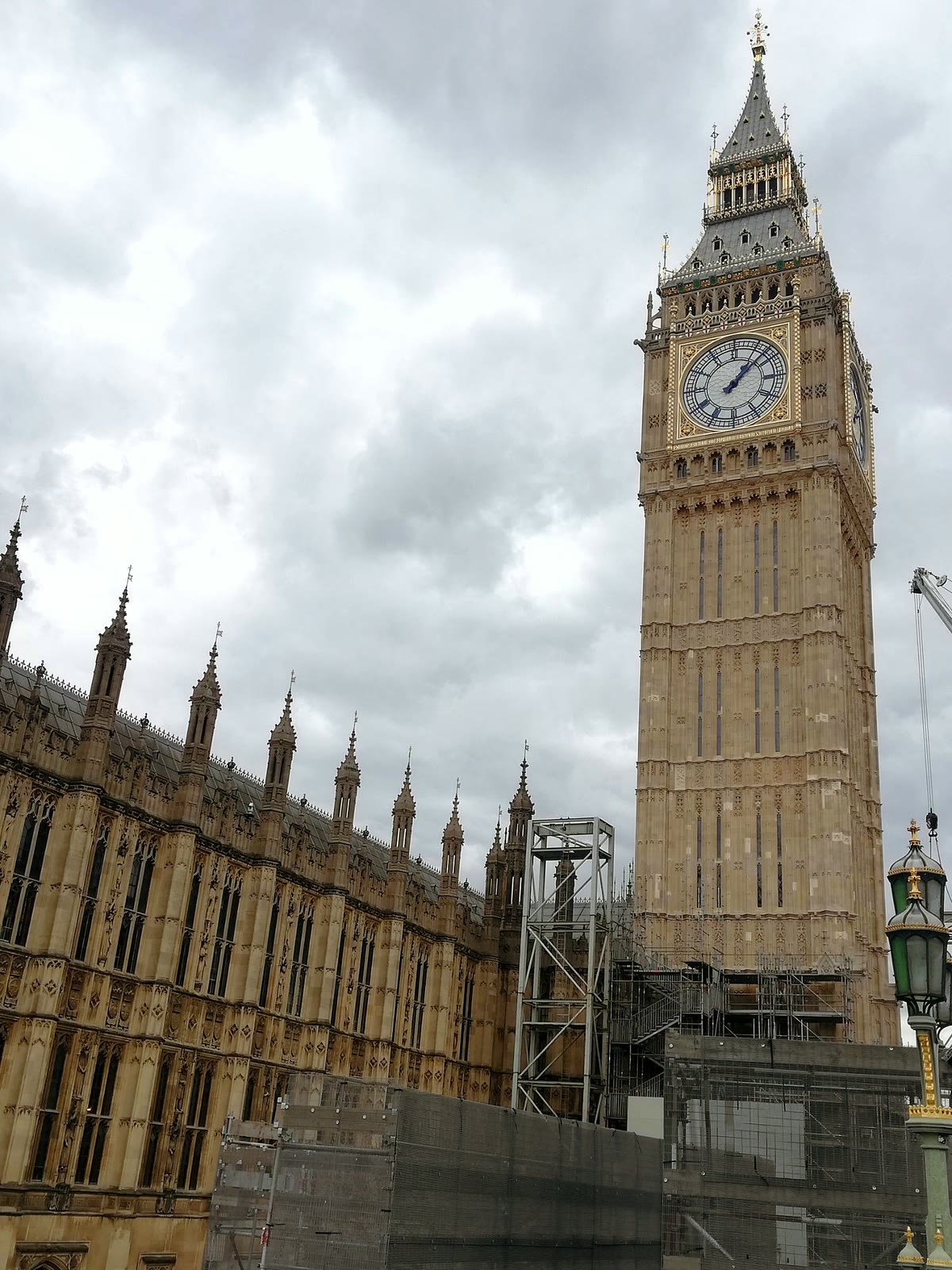
Big Ben and the Palace of Westminster. “Big Ben” is actually the name of the great bell; the clock tower has been called the Elizabeth Tower since 2012, when it was renamed for the Diamond Jubilee of Elizabeth II. It was finished in 1859, stands about 96 metres tall and is part of the Palace of Westminster, home of the British Parliament, which was rebuilt in neo-Gothic style after the fire of 1834 to a design by Charles Barry, with the Gothic detailing by Augustus Pugin. Together with Westminster Abbey, the complex is a World Heritage Site. The tower went through a long restoration that ended in 2022, and in the photo you can see the scaffolding and hoardings of the works at its base. Climbing the tower is reserved for UK residents through their Member of Parliament, but anyone can book a guided tour of the Palace on the official Parliament website.
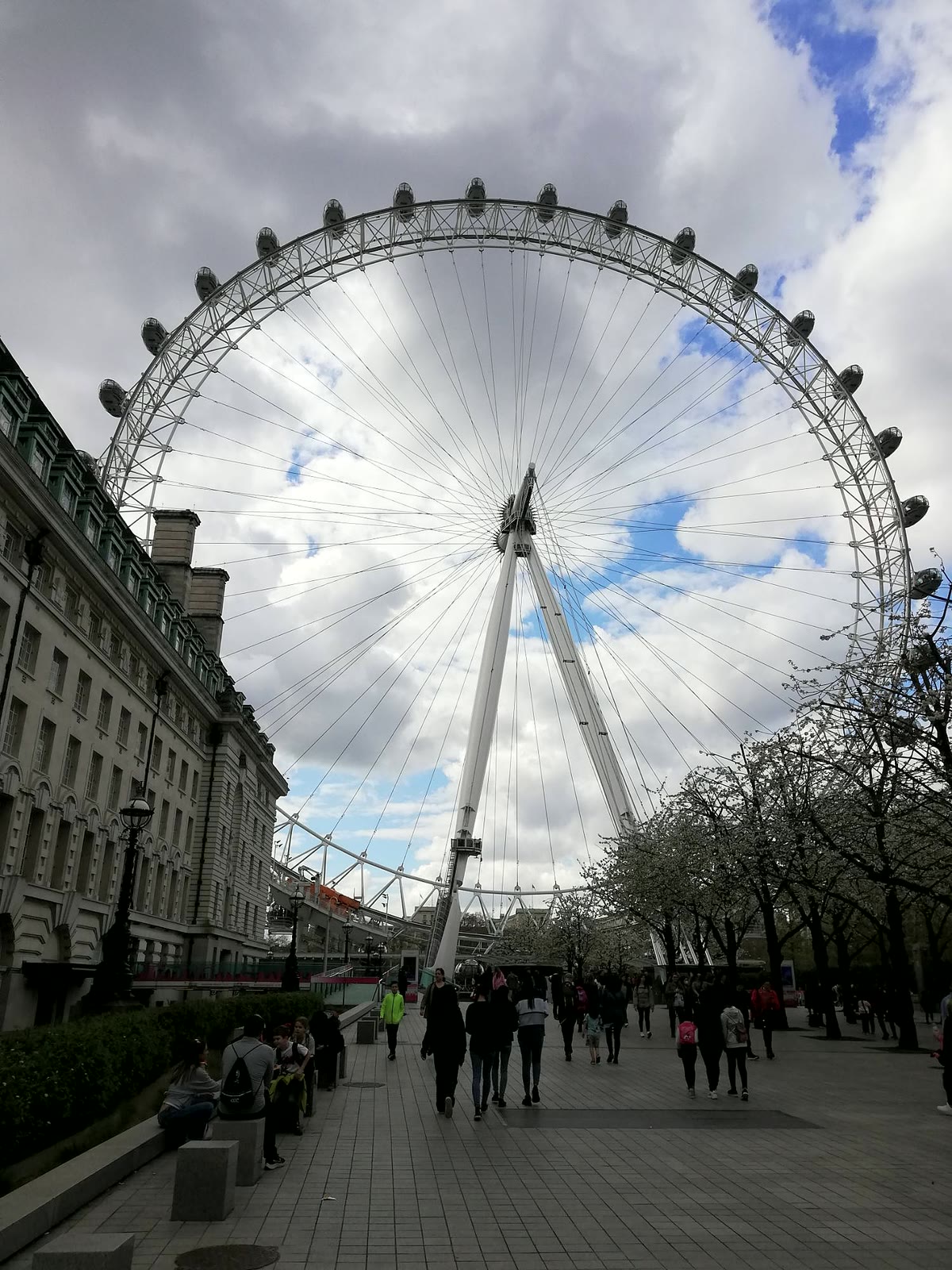
The London Eye. The wheel on the south bank is 135 metres tall, has 32 glazed capsules (one for each London borough) and makes a full turn in about 30 minutes, so slowly that it does not need to stop for you to board. It was built for the turn of the millennium, opened to the public in March 2000 and was meant to last only a few years, but it stayed and is now one of the symbols of the city. On clear days the view reaches about 40 kilometres. It is best to buy the ticket online, which is cheaper and avoids the queue, and to choose a sunset slot if the sky cooperates. In the photo, taken from below, you can see the cable structure and the County Hall building on the left.
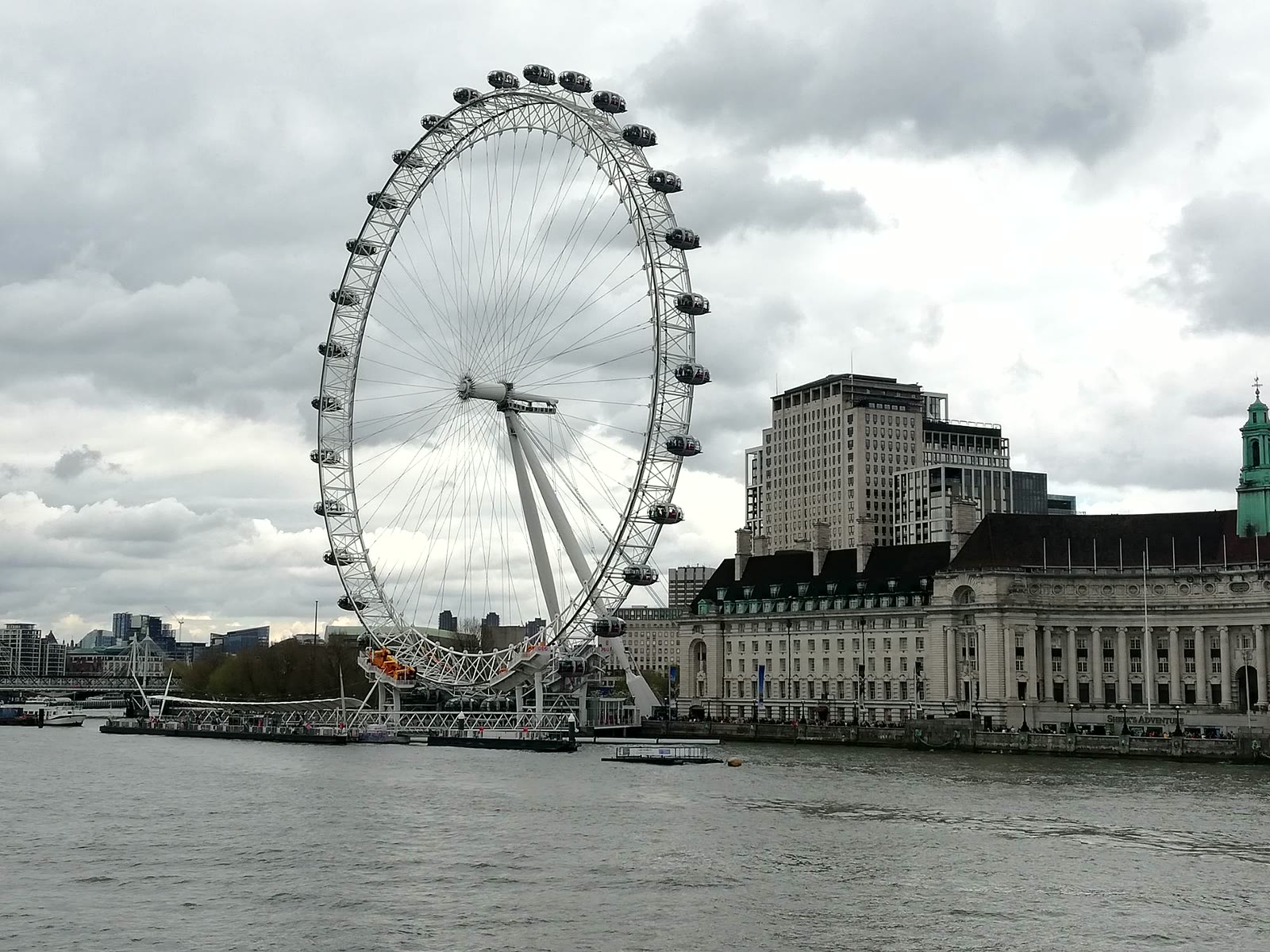
The south bank and County Hall. From the other side of the Thames you can see the wheel next to the County Hall building, the former seat of London's government, built in the early 20th century; today it houses hotels and attractions such as the SEA LIFE aquarium and Shrek's Adventure, whose name can be read on the facade. On the left of the photo you can see the Hungerford footbridges, which cross the river next to Charing Cross station. It is the starting point of the walk along the south bank, the Thames Path, which in about five kilometres leads from Westminster Bridge to Tower Bridge past the Southbank Centre, the Tate Modern, Shakespeare's Globe theatre and Borough Market. It takes an hour and a half or two without hurry, with stops for photos.
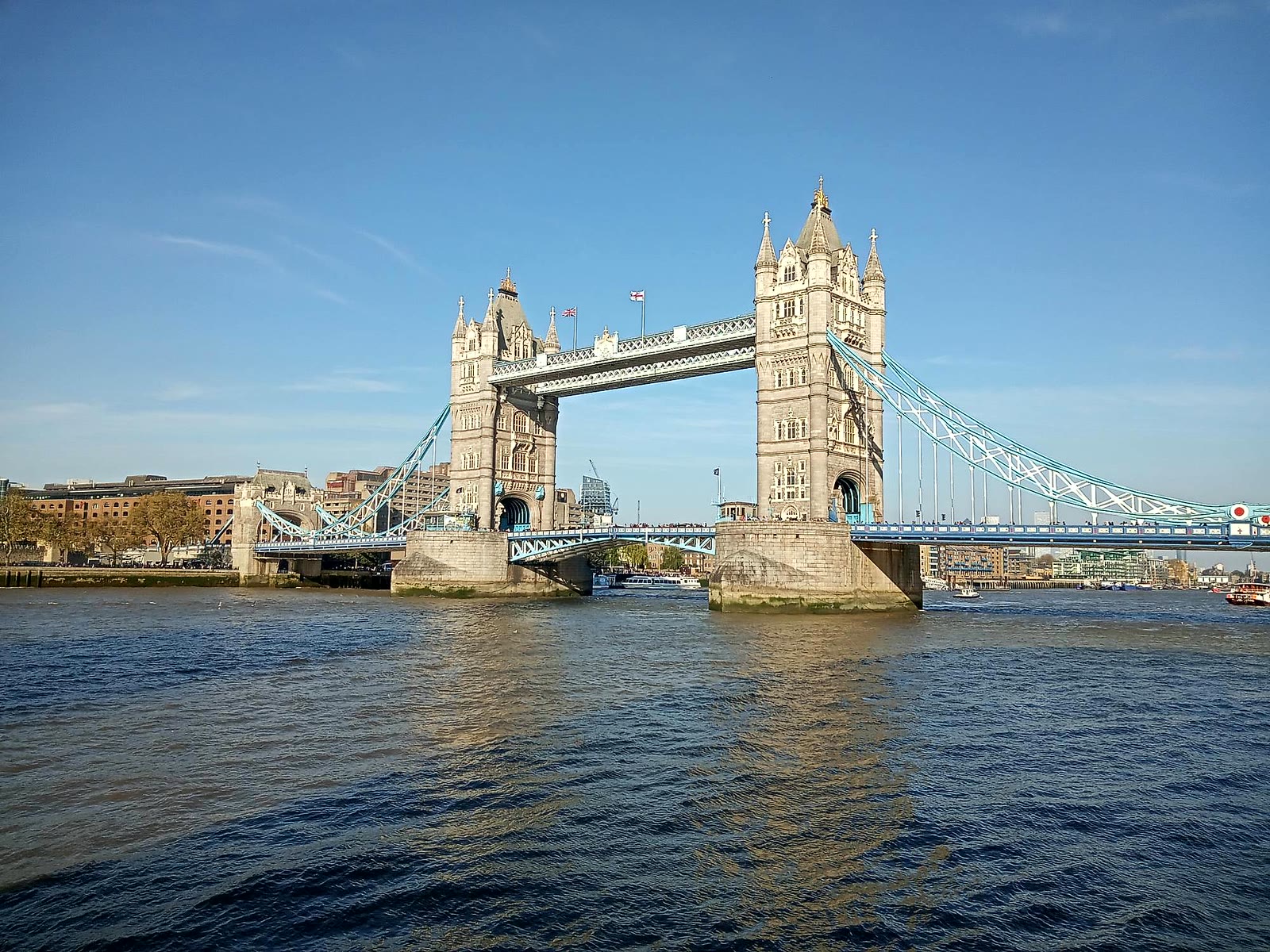
Tower Bridge. It is the most photographed bridge in London and is often confused with London Bridge, which is further upstream and much plainer. Tower Bridge opened in 1894, designed by the architect Horace Jones and the engineer John Wolfe Barry, and combines two Victorian Gothic towers with a central bascule span that lifts to let tall ships through; the opening times are published on the bridge's website. High up between the towers there are walkways at about 42 metres with a glass floor, and the exhibition lets you see the original engine rooms. A few minutes away is the Tower of London, an 11th-century fortress that holds the Crown Jewels, and the best view of the bridge is from the riverbank in afternoon light, as in the photo.
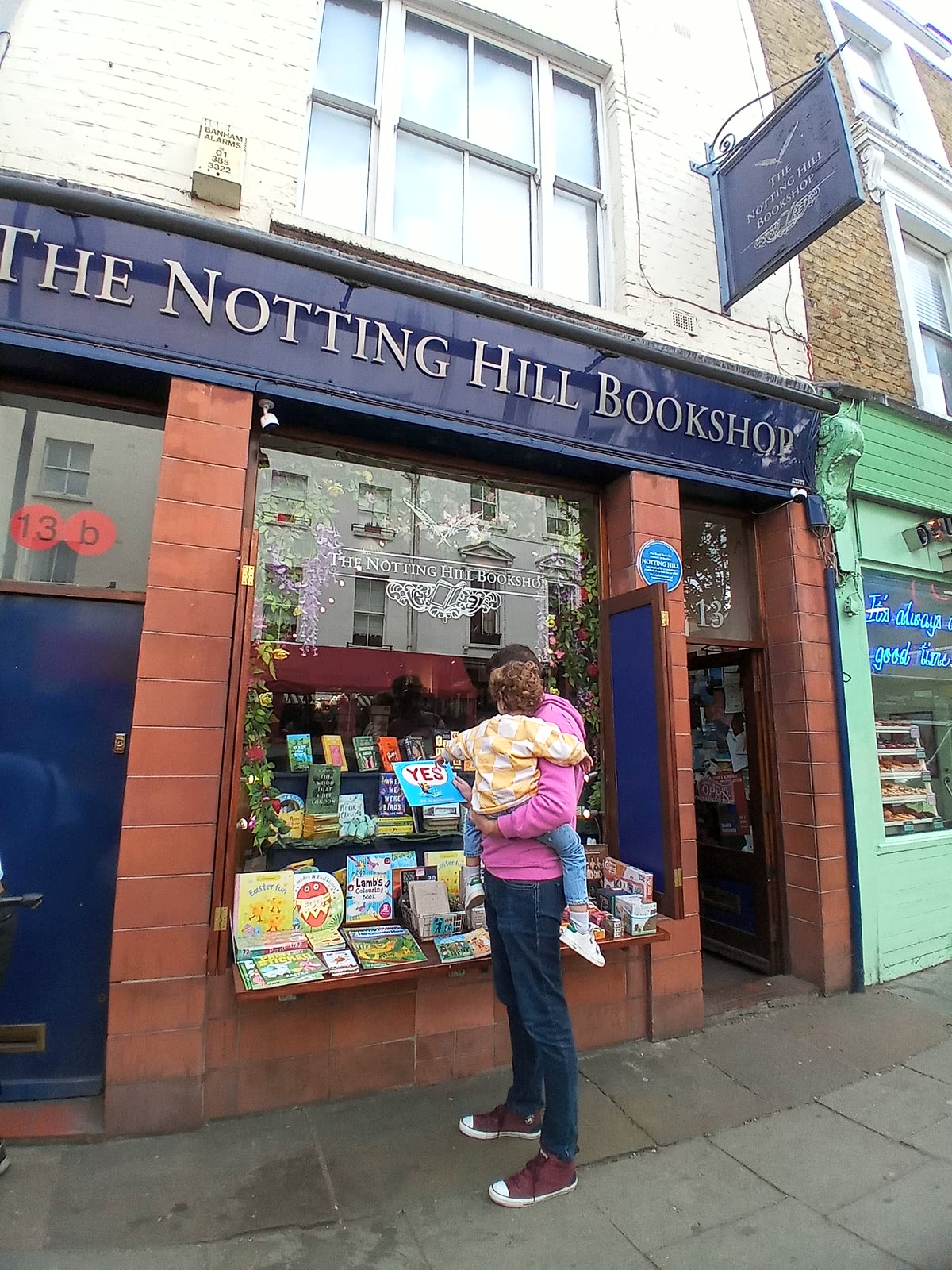
Notting Hill and its bookshop. Notting Hill is a residential neighbourhood in west London, with pastel-coloured houses, charming shops and a lively atmosphere at weekends. It became famous thanks to the film “Notting Hill” (1999), with Hugh Grant and Julia Roberts, and the bookshop in the photo, The Notting Hill Bookshop, at 13 Blenheim Crescent, keeps alive the memory of the travel bookshop that inspired the one in the film; a blue plaque by the door recalls it. It is about 10 to 15 minutes on foot from Notting Hill Gate station. Very close is Portobello Road, with stalls selling antiques, fruit, clothes and food; Saturday is the big day. On the last weekend of August the Notting Hill Carnival takes place here, one of the biggest in Europe.
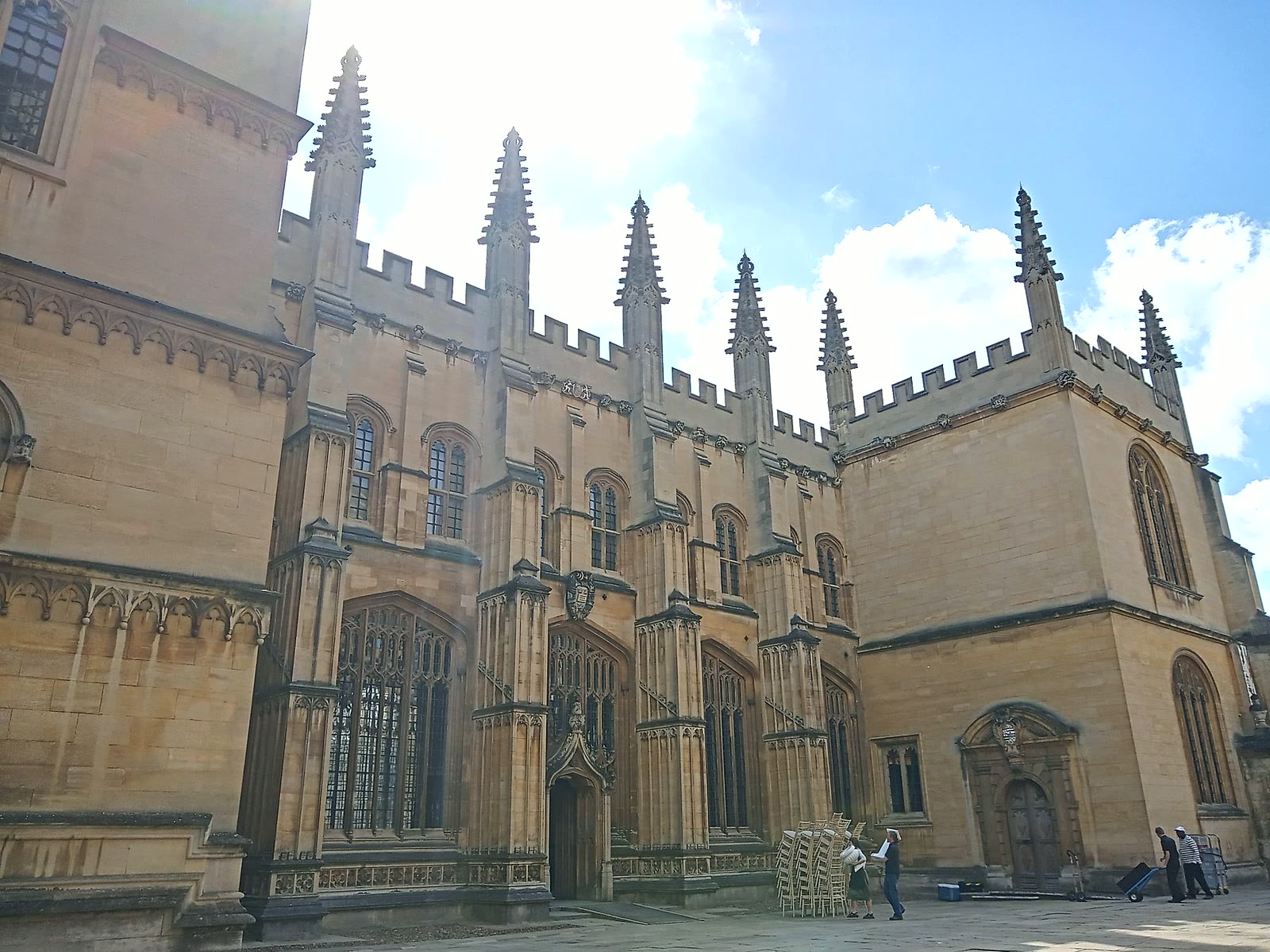
A day trip to Oxford. Oxford is about 90 kilometres from London, roughly an hour by train from Paddington station, and makes an ideal day trip. Its university is the oldest in the English-speaking world, with teaching documented since 1096, and the city is a collection of honey-coloured stone colleges, courtyards and towers. The photo shows one of the courtyards of the Bodleian Library, with its Gothic facade of pinnacles and battlements. The library opened in 1602 thanks to Sir Thomas Bodley and is one of the oldest in Europe; it is visited on a guided tour, which includes the Divinity School, with its Gothic fan-vaulted ceiling, and Duke Humfrey's Library, both settings of the Harry Potter films. Book the ticket online and leave time to wander around the colleges and the town centre.
What to eat and drink. London has everything, but some dishes are worth trying: fish and chips (battered fish with chips and, sometimes, mushy peas), the full English breakfast, the pie with mash and, on Sundays, the Sunday roast, a roast with potatoes and gravy. Afternoon tea with sandwiches, scones and cakes is a classic, although it is not cheap and usually needs a reservation. For good, uncomplicated food, Borough Market, one of the oldest food markets in the city, and the Indian restaurants of Brick Lane are good options. In a traditional pub you order and pay at the bar, with no table service, and many restaurants add a service charge of around 12.5% to the bill, so it is worth checking it before leaving a tip.
Practical tips. (1) To enter the United Kingdom you need a passport, and European travellers also need an ETA (electronic travel authorisation) which is processed online before the trip; check the requirements and the price on the official UK Government website. (2) On the Tube, buses and trams you pay with a contactless card or phone, with a daily cap, and buses do not accept cash; the Elizabeth line and the Piccadilly line link Heathrow with the centre. (3) The currency is the pound sterling and cards are accepted almost everywhere. (4) The weather is changeable: bring a waterproof and layers, even if the sun comes out. (5) Many museums have free general admission, such as the British Museum, the National Gallery, the Tate Modern and the Natural History Museum; temporary exhibitions are paid. (6) Traffic drives on the left: look right first when crossing. (7) The plug is type G, so you need an adaptor. (8) Book the London Eye, the Tower of London and Tower Bridge online and, if you want a free view, book the Sky Garden in advance. (9) In very crowded spots, watch your bags and phones.
Conclusion. London combines monuments we already know from postcards, such as Big Ben, the London Eye and Tower Bridge, with quiet neighbourhoods like Notting Hill and nearby trips like Oxford. Three days let you see the essentials and, even so, there is still much to discover, from its free museums to its markets and parks. It is a destination best enjoyed on foot, with the Thames as the common thread, and one you want to come back to.

Blog designed by
fedeurru
What do you think about the blog? Please rate it.
London in 3 days: Big Ben, the London Eye, Tower Bridge and Notting Hill, with a day trip to Oxford
Londres
Why "Treep"?
Treep comes from the union of "Tree" and "Trip".
A tree grows deep roots while never stopping its upward, outward growth. That is how we think about travel: it is not just moving from one place to another, but also a journey back to our own roots, a way to reconnect with nature and with the people around us, and a path of personal growth that every trip leaves behind.
Treep was born to be part of that journey: a place to plan, share and keep the trips that help us grow, the same way a tree never stops reaching outward with its branches.