
Chefchaouen in 2 days: the blue city of the Rif, among alleys, spices and cats
— / 10
(0 ratings)
 ES
 EN

Chefchaouen
Why go to Chefchaouen. Chefchaouen (also spelled Chaouen or Xauen) is a small mountain town in the Rif, in north-west Morocco, at about 600 metres above sea level. It was founded in 1471 as a fortress to defend the region and, over the following centuries, Muslims and Jews expelled from Andalusia settled here, leaving whitewashed houses, tiled roofs and courtyards that make it so different from other Moroccan cities. Its blue-painted medina, its staircases with colourful flowerpots and its cats have made it one of the most photogenic towns in the country. This guide covers what we saw in two days, with an explanation of each place.
How to organise the two days. A proposal: the first day, the medina (Uta el-Hammam square, with the kasbah and the Great Mosque, and the blue alleys that climb and get lost among the houses) and, as evening falls, the Ras el-Maa waterfall, at the edge of the old town; the second, climbing up to the Spanish Mosque to watch the sunset over the town, shopping in the souks and, if there is time, a trip to the Akchour waterfalls, in Talassemtane National Park. Almost everything is done on foot, with many hills and stairs, so it is best to wear comfortable shoes. One day shows you the essentials, but two let you walk without hurry.
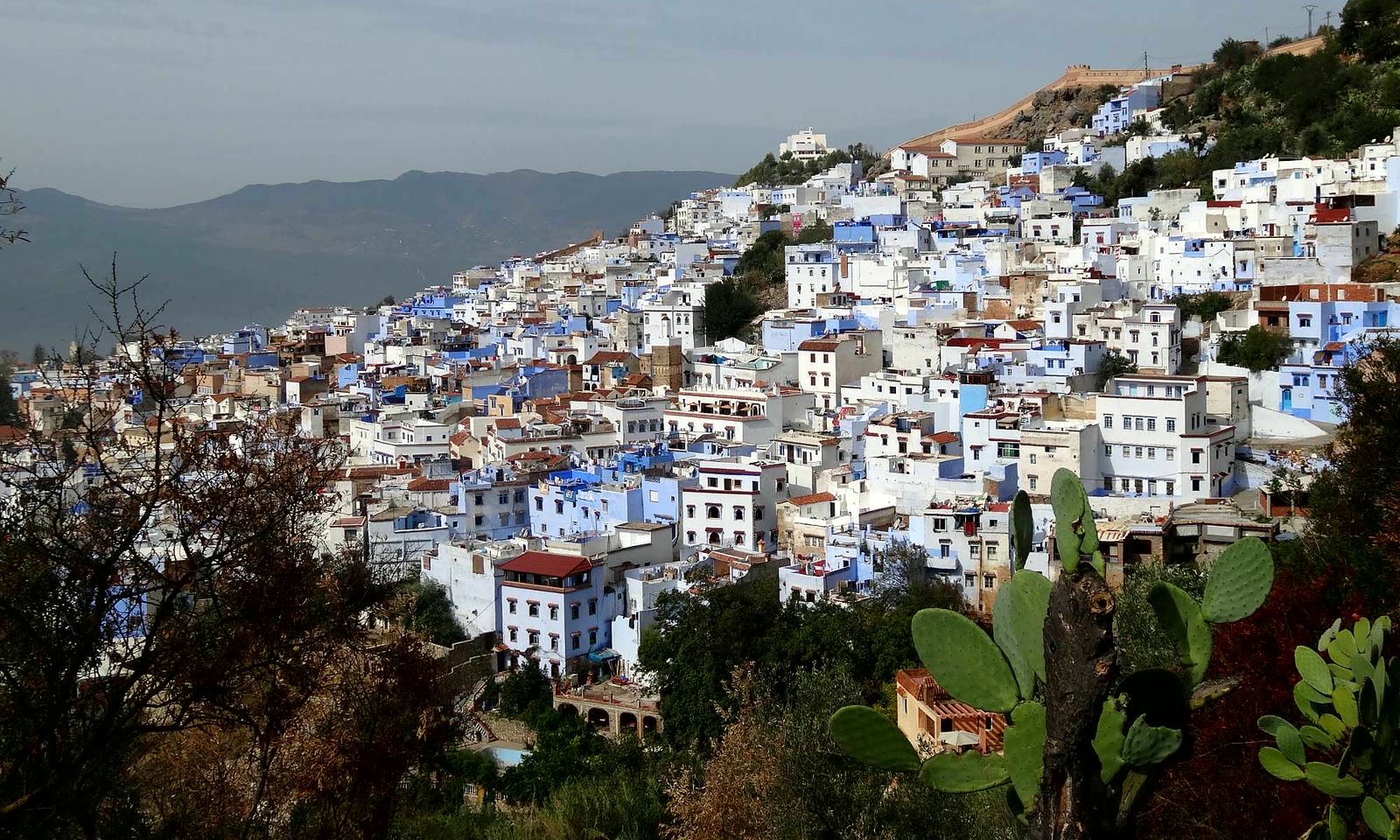
The town from the hillside. From the paths around the medina you can see how Chefchaouen spills down the mountain: hundreds of white and blue houses piled on top of one another, with red-tiled roofs and, in the background, the wall climbing the hill and the Rif mountains. It is the best way to understand the town and to take the classic photo; the best hours are in the morning and at sunset, when the light softens the white. The prickly pears in the foreground are typical of these paths.
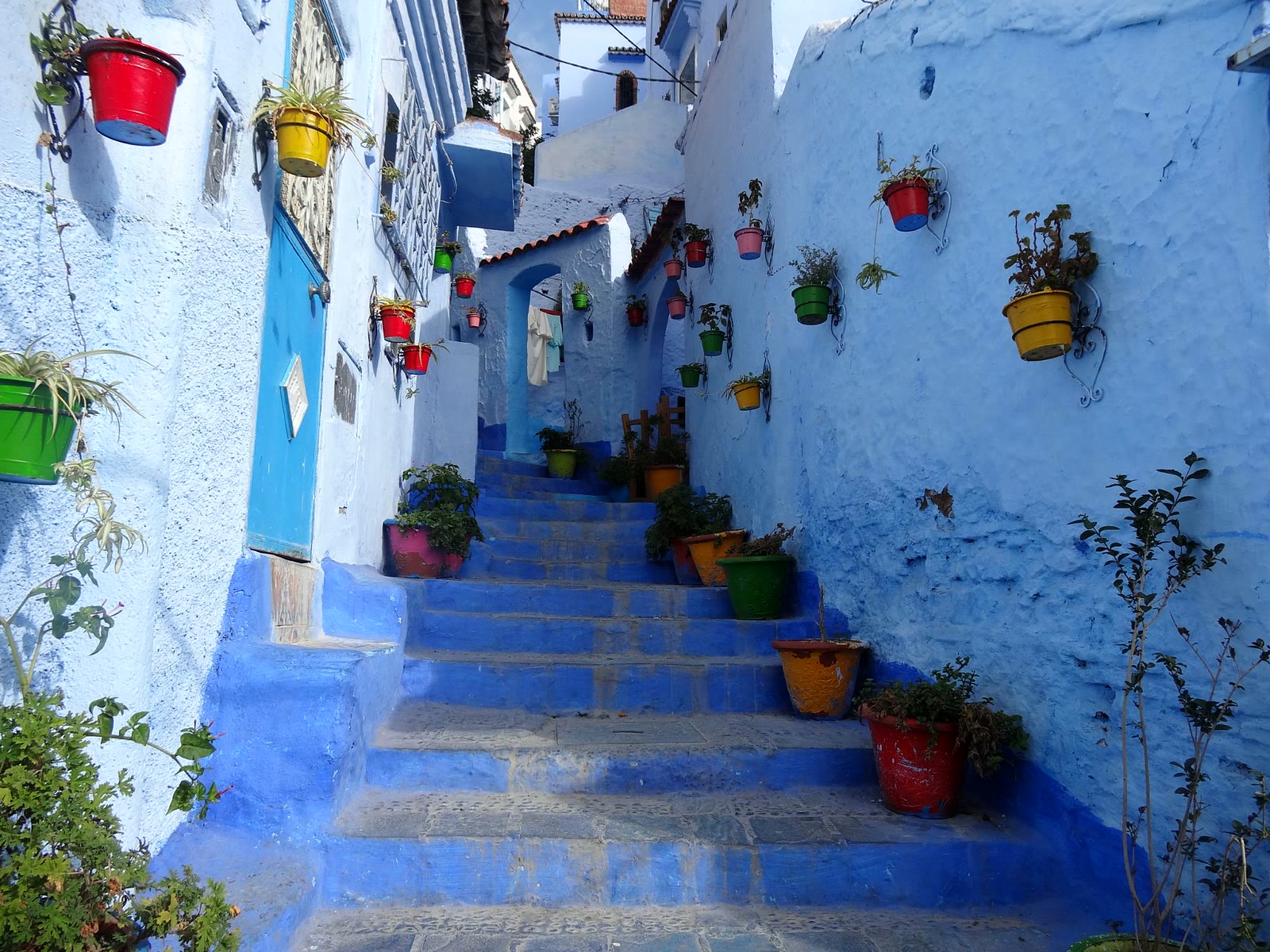
Alleys and blue staircases. Blue is the signature of the medina: walls, doors and even the steps are painted in different shades, from sky blue to cobalt. There are several explanations for its origin: some say it was brought by the Jewish families who settled here in the 20th century, as a symbol of the sky; others, that it keeps mosquitoes away or cools the houses. Whatever the reason, it is repainted often today, and the colourful flowerpots hanging on the walls complete a perfect setting for wandering aimlessly.
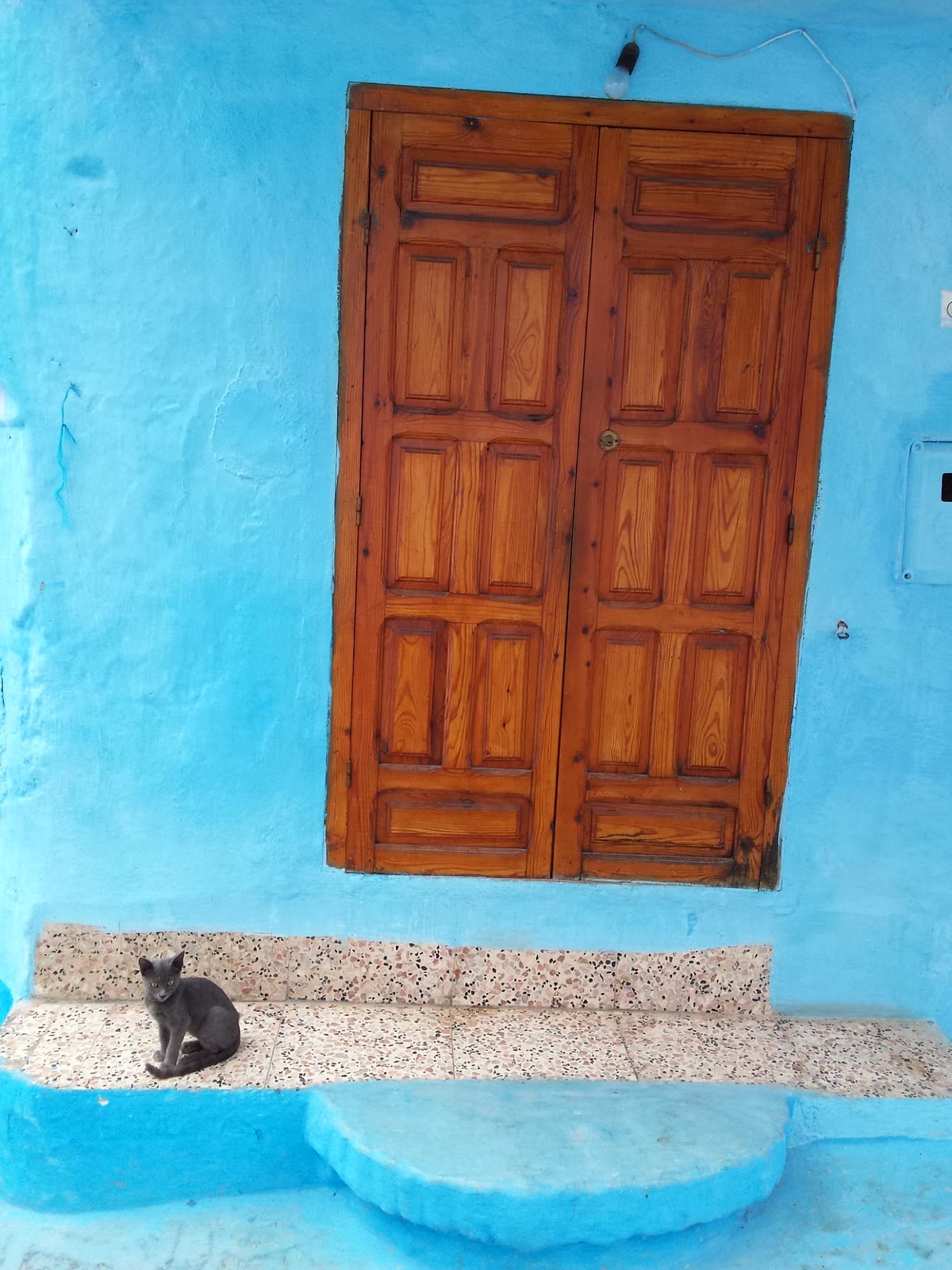
Doors, windows and cats. Once in the medina it is worth paying attention to the details: wooden doors and shutters, iron knockers and small tiled benches at the entrance of the houses, where neighbours and cats sit. Chefchaouen is full of stray cats that stroll calmly along the stairs and rooftops, and they have almost become one more attraction. You can photograph them, but you should leave them in peace.
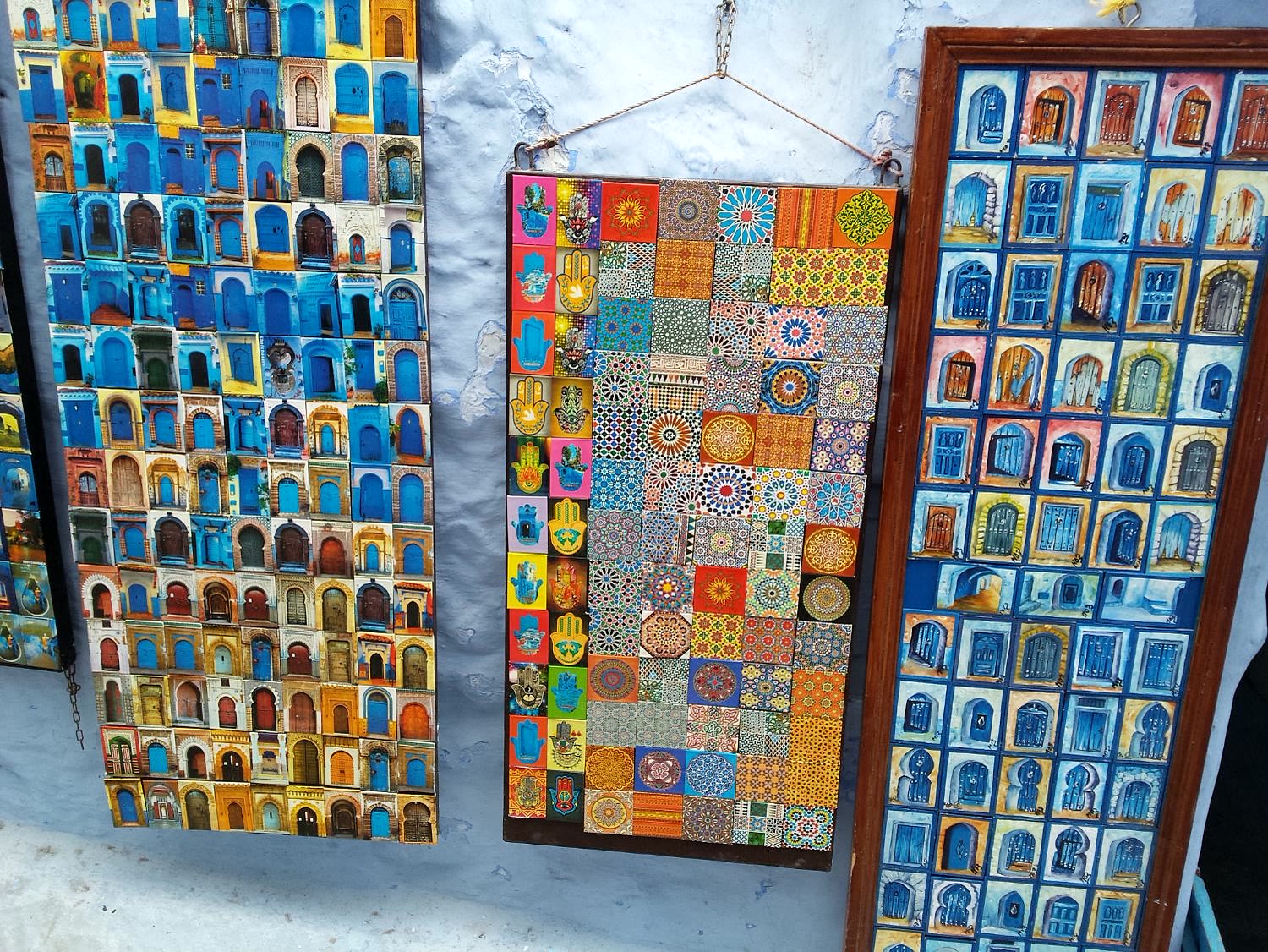
Souvenirs to take home. The shops and stalls of the medina sell panels of magnets with photos of the town's blue doors, hand-painted drawings of doors and geometric zellige patterns, as well as the Hand of Fatima (hamsa), a protective symbol widespread in Morocco. They are cheap, light and a nice keepsake. For something more handmade, look for hand-woven wool blankets and garments, ceramics and wicker baskets, and compare prices before buying.
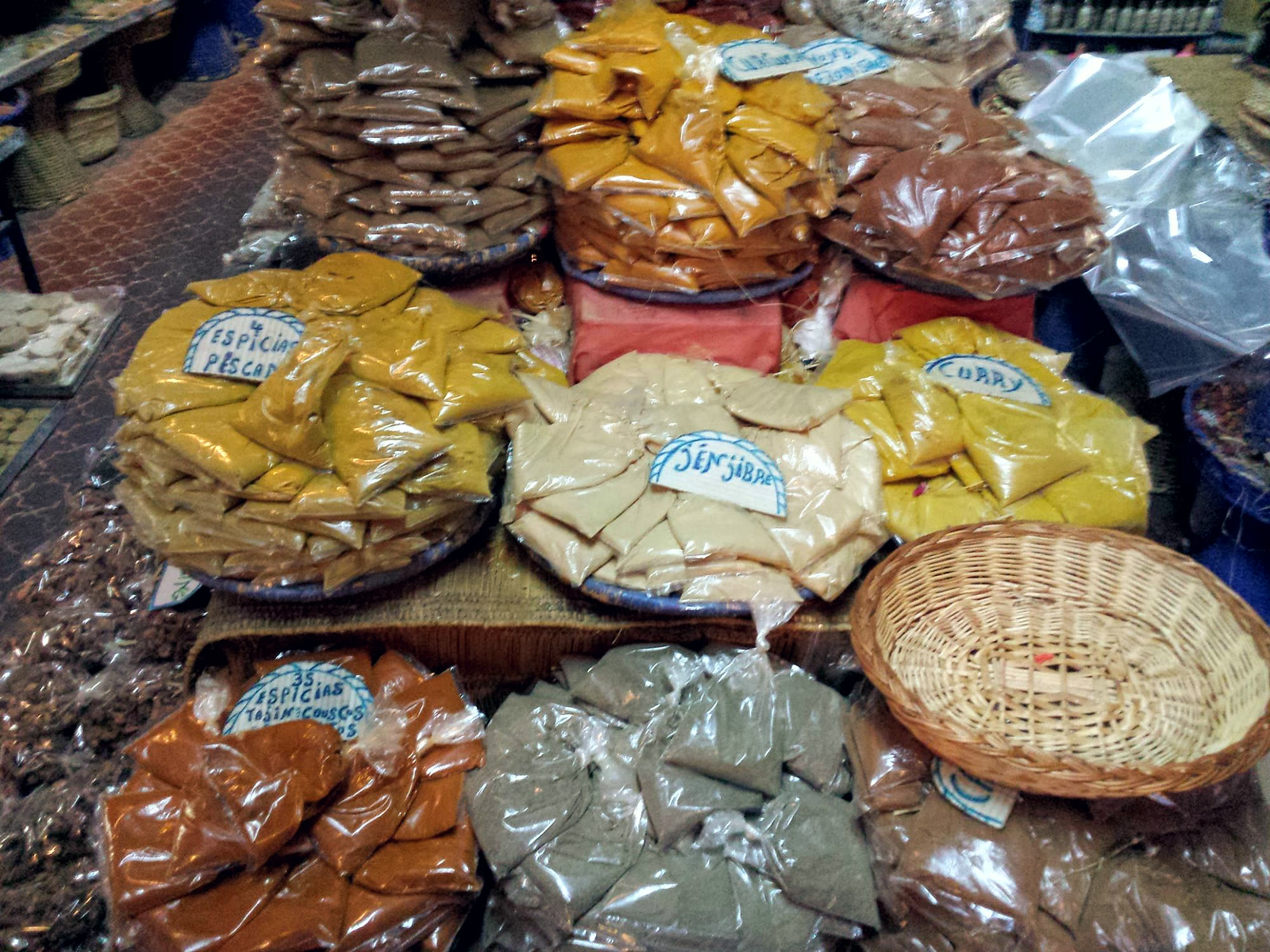
Spices and market. The spice stalls are a must-stop: small bags piled on trays and labelled by hand, with curry, ginger, turmeric, mixes for fish and the famous “35 spices” blend for tagines and couscous. They sell for a few dirhams and are an easy, cheap way to take the taste of Morocco home. You can haggle politely, and it is worth checking that the bags are well sealed for the journey back.
What to eat and drink. Local cuisine revolves around the tagine (a stew of meat or vegetables cooked in an earthenware pot with a conical lid), couscous, served mostly on Fridays, harira (a soup of pulses and tomato) and bissara, a fava bean cream eaten for breakfast or dinner. You should also try the local goat cheese, olive oil and freshly baked flatbreads. To drink, green tea with mint, served at all hours and offered as a gesture of hospitality, and freshly squeezed orange juice. In Chefchaouen it is not easy to find alcohol: most restaurants do not serve it.
Practical tips. (1) The town has no airport or train station: you get there by bus or taxi from Tetouan (about 1 hour), Tangier (about 2.5 to 3 hours), Fez (about 4) or Casablanca (about 5 or 6). (2) The best seasons are spring and autumn; in summer it is hot by day and in winter it is cold and rains a lot, because of the altitude. (3) The currency is the Moroccan dirham; it is worth carrying cash, because not everywhere accepts cards. (4) Ask permission before photographing people and respect the residents, who live in the medina. (5) Some “guides” offer their services in the street: you can politely decline, because the medina is small and easy to walk without getting lost. (6) In the Rif it is common to be offered hashish; it is illegal, so the best thing is to say no with a smile. (7) Wear comfortable shoes and bring a jacket, because it gets cool in the evening.
Conclusion. Chefchaouen is a small but unforgettable town: a blue labyrinth among the mountains, with a quiet way of life, good food and plenty of corners to photograph. Two days let you see the essentials and, even so, there is still much to discover, from the Akchour waterfalls to the villages of the Rif. It is a perfect destination for those looking for a slower-paced Morocco.
Blog designed by
fedeurru
What do you think about the blog? Please rate it.
Chefchaouen in 2 days: the blue city of the Rif, among alleys, spices and cats
Chefchaouen
Why "Treep"?
Treep comes from the union of "Tree" and "Trip".
A tree grows deep roots while never stopping its upward, outward growth. That is how we think about travel: it is not just moving from one place to another, but also a journey back to our own roots, a way to reconnect with nature and with the people around us, and a path of personal growth that every trip leaves behind.
Treep was born to be part of that journey: a place to plan, share and keep the trips that help us grow, the same way a tree never stops reaching outward with its branches.