
Porto in 3 days: the Ribeira, the Dom Luís I Bridge and port wine
9.00 / 10
(1 rating)
 ES
 EN

Porto
⛰️ ALTITUDE
104 m
📅 BEST SEASON
April to June and September to October
🗣️ LANGUAGE
Portuguese
💉 VACCINES & PREVENTION
No mandatory vaccines are required for entry. Routine vaccines (MMR, tetanus-diphtheria) should be up to date; check with a travel health clinic before departure.
Why go to Porto. Porto is Portugal's second city, built on the slopes of the Douro River a few kilometres from where it meets the Atlantic. It gave its name to Portugal (the old Roman Portus Cale) and to port wine, which ages in the cellars on the opposite bank. Its historic centre, with the Ribeira and the bridges over the Douro, has been a UNESCO World Heritage Site since 1996. It is a city of hills, colourful façades, tiles and viewpoints that is easy to explore on foot and by metro. This guide covers what we saw in three days, with an explanation of each place.
How to organise the three days. A proposal: the first day, the Ribeira and the historic centre (the Ribeira, the Dom Luís I Bridge, the Cathedral and São Bento station); the second, the Livraria Lello, the Clérigos Tower, the Palácio da Bolsa and the Bolhão Market; the third, Vila Nova de Gaia with the port wine cellars and sunset at the Foz do Douro, where the river meets the sea. If there is time left, a day trip to Guimarães or a journey through the Douro Valley completes the trip. Almost everything is done on foot, with hills, or by metro and tram.
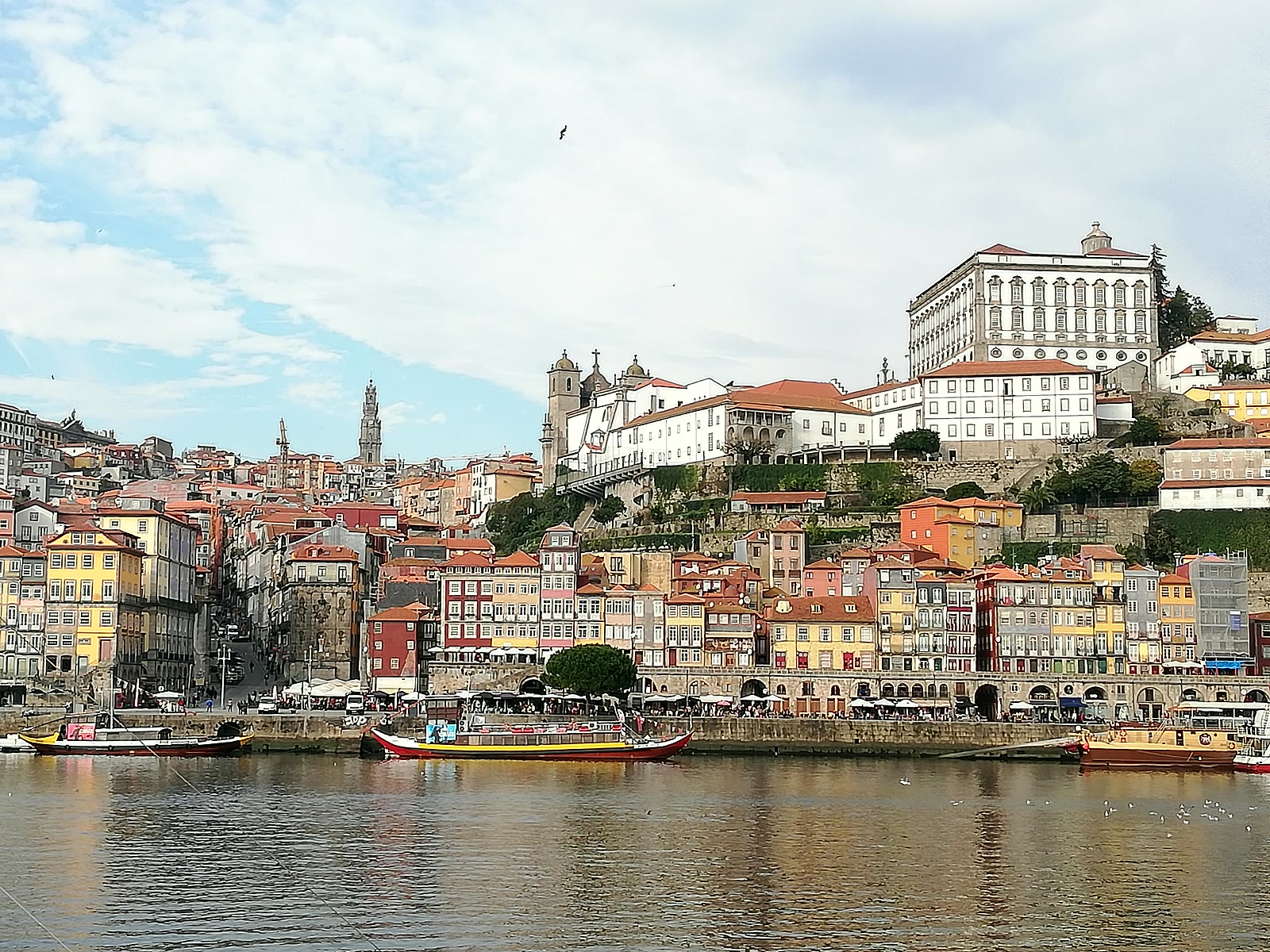
The Ribeira. It is the riverside district and the heart of the city, with narrow, colourful houses climbing the hillside, and terraces and restaurants right on the quay. From the opposite bank, in Vila Nova de Gaia, you can see the whole city: the Clérigos Tower rising between the rooftops and, above, the Episcopal Palace next to the cathedral. On the water rest the rabelo boats, the traditional vessels used to bring wine barrels down from the Douro Valley to the cellars. Today they are used for river cruises, and sunset is a good time to look.
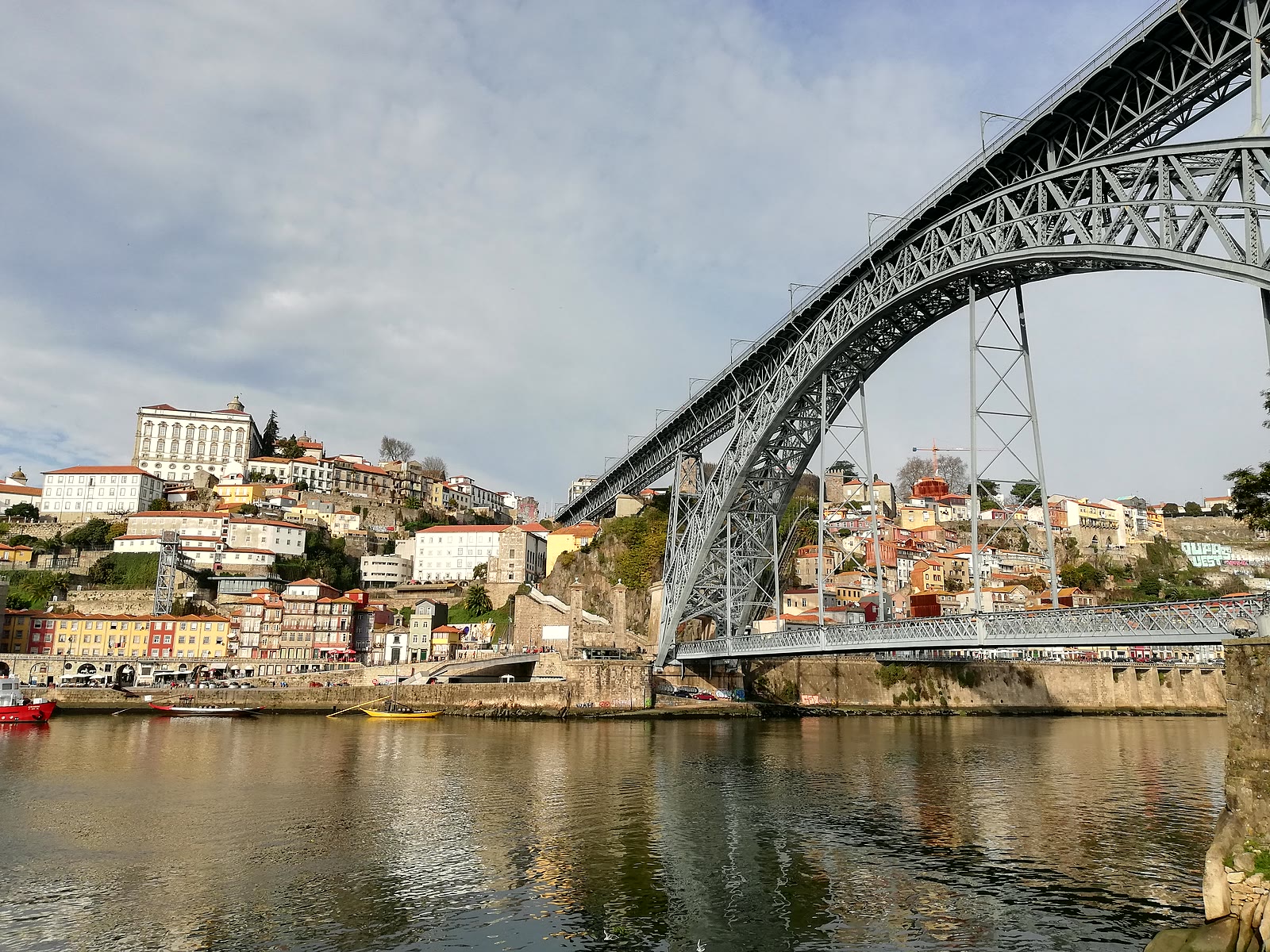
The Dom Luís I Bridge. It is the most famous image of Porto: an iron bridge with two decks, opened in 1886 and designed by the engineer Théophile Seyrig, a former partner of Gustave Eiffel. Its great metal arch links the Ribeira with Vila Nova de Gaia. The lower deck, at river level, is for pedestrians and traffic; the upper one, about 60 metres up, carries the metro and can also be walked, with views of the whole city. Crossing it along the top at sunset is almost a must, although it is best not to look down if you suffer from vertigo.
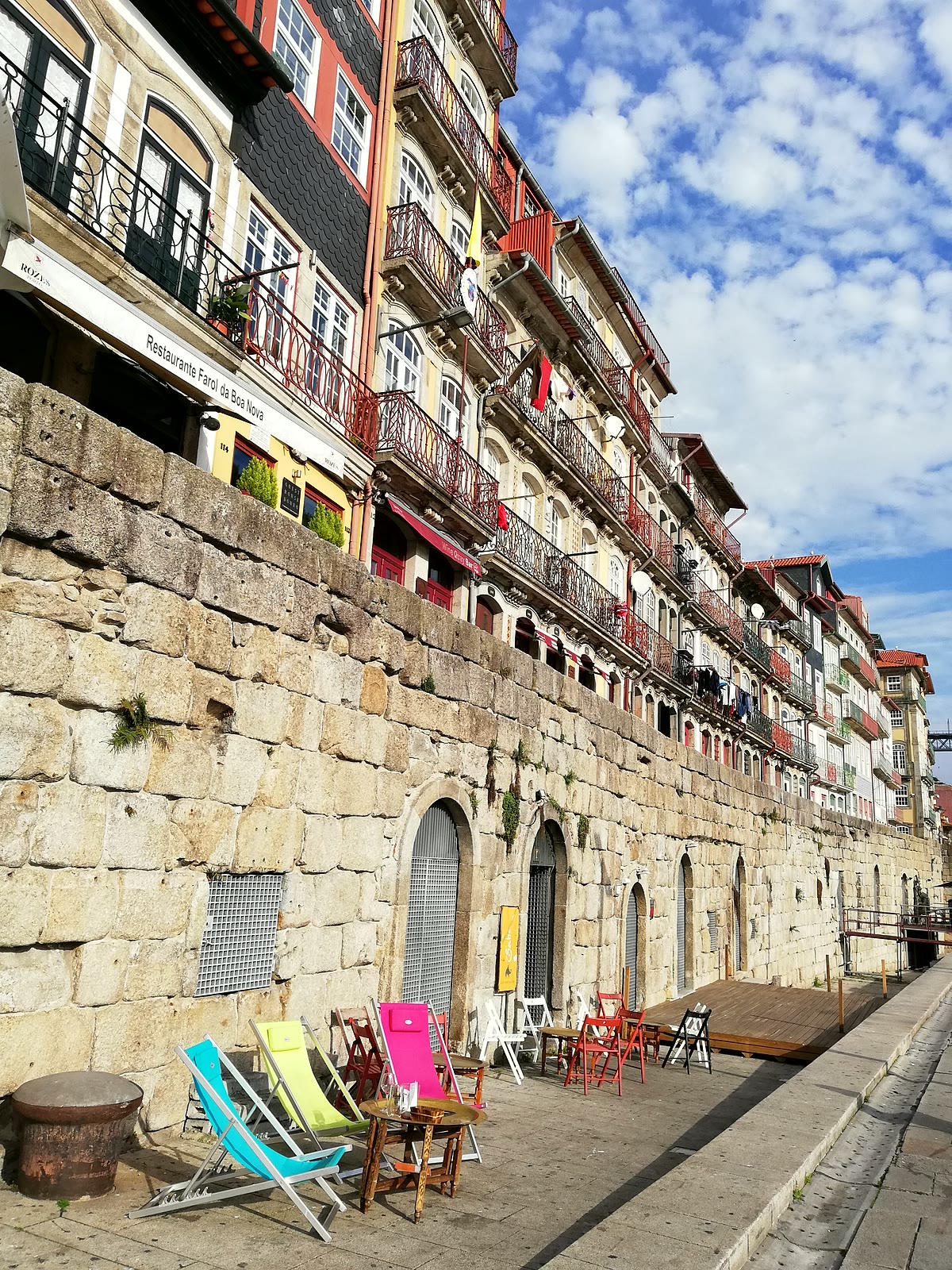
Strolling along the Ribeira. Beside the granite quay wall, colourful façades and wrought-iron balconies pile up towards the sky, some with slate cladding, and on the pavement there are terraces with brightly coloured deckchairs where you can sit for a drink. It is a good place to walk without hurry, look at the details of the houses and try a port wine with a view of the river. The streets that climb from here are steep and narrow, with alleys and stairs leading to the upper town, so it is best to wear comfortable shoes.
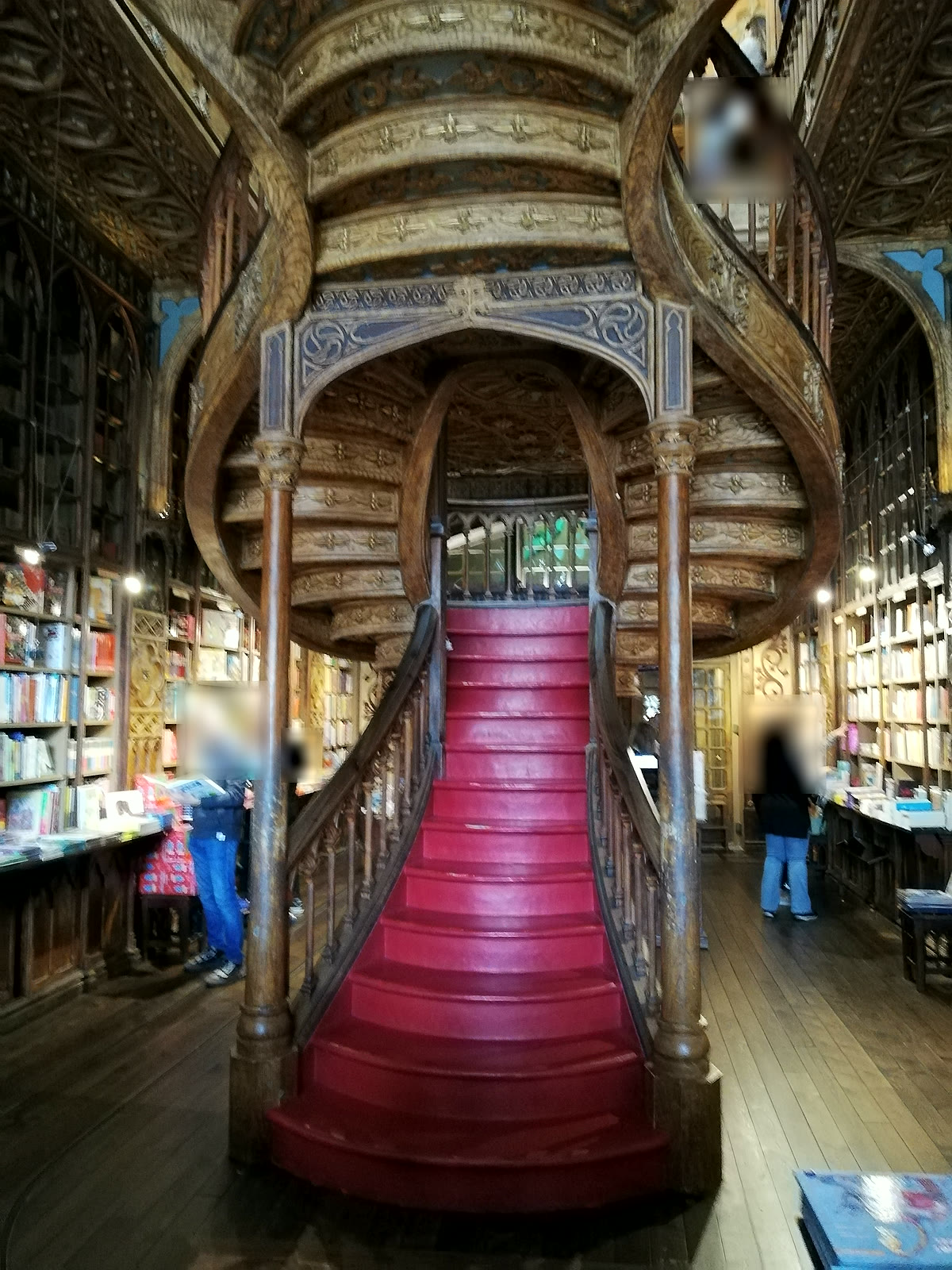
The Livraria Lello. It opened in 1906 and is often listed among the most beautiful bookshops in the world, with a neo-Gothic interior of carved wood. Its most famous feature is the red central staircase, which curves up to the upper floor under a stained-glass skylight. An entrance fee is usually charged (sometimes deductible if you buy a book) and there is almost always a queue: it is best to book online and arrive first thing. Inside you walk slowly among the shelves and it is worth looking up at the ceilings and the carved railings.
Other places not to miss. The Clérigos Tower, Baroque and about 76 metres high, with 225 steps up to a terrace with the best view of the centre; São Bento station, with thousands of blue and white tiles telling the history of Portugal; the Palácio da Bolsa and its Arab Room; the Bolhão Market, to see local produce; and, across the bridge, Vila Nova de Gaia, home of the port wine cellars, with tours and tastings. At the end of the Douro, the Foz do Douro is a good place to watch the sunset by the sea.
What to eat and drink. The great star is the francesinha, a hearty sandwich with ham, sausage and steak covered in melted cheese and a spicy beer sauce, usually served with chips. You should also try cod in its thousand forms, tripe Porto style (the dish that gave its people the nickname “tripeiros”), caldo verde and, for dessert, pastéis de nata. To drink, port wine (white, red or as a port tonic with ice in summer) and vinho verde, young and light. Restaurants on the Ribeira are pricier; on the streets behind it you eat better and cheaper.
Practical tips. (1) The best seasons are spring and autumn; in summer it is hot and in winter it often rains, so it is worth bringing an umbrella. (2) The Night of São João (23 to 24 June) is the city's big festival, with grilled sardines and music in the streets, but you must book accommodation well in advance. (3) The airport is connected to the centre by metro, and to get around there are the metro, tram and buses with the Andante card. (4) Wear comfortable shoes: there are many hills and cobbled streets. (5) Book the Livraria Lello and the cellar tours in advance. (6) Beware of pickpockets in the busiest areas. (7) For an extra day, the Douro Valley by train or Guimarães make excellent excursions.
Conclusion. Porto is a postcard city that surprises with its mix of history, river, wine and good food. It is easy to explore on foot, has hearty cuisine and makes you want to return. Three days let you see the essentials and, even so, there is still plenty to discover, from the Douro Valley to the beaches of the coast.
Blog designed by
eru
What do you think about the blog? Please rate it.
Porto in 3 days: the Ribeira, the Dom Luís I Bridge and port wine
Porto
Why "Treep"?
Treep comes from the union of "Tree" and "Trip".
A tree grows deep roots while never stopping its upward, outward growth. That is how we think about travel: it is not just moving from one place to another, but also a journey back to our own roots, a way to reconnect with nature and with the people around us, and a path of personal growth that every trip leaves behind.
Treep was born to be part of that journey: a place to plan, share and keep the trips that help us grow, the same way a tree never stops reaching outward with its branches.