
Seville in 3 days: the Plaza de España, the Guadalquivir and the taste of Andalusian tapas
8.75 / 10
(4 ratings)
 ES
 EN
Sevilla
⛰️ ALTITUDE
7 m
📅 BEST SEASON
March to May and October to November
🗣️ LANGUAGE
Spanish
💉 VACCINES & PREVENTION
No mandatory vaccines are required for entry. Routine vaccines (MMR, tetanus-diphtheria) should be up to date; check with a travel health clinic before departure.
Why go to Seville. Seville is the capital of Andalusia and one of the cities with the most character in Spain. It was Roman Hispalis, Muslim Isbiliya and, after the Christian conquest of 1248, one of the richest ports in the world, because trade with the Americas departed from and arrived here. An extraordinary heritage remains from all that: the Cathedral and the Giralda, the Royal Alcázar, the Archivo de Indias and the Plaza de España. It is a flat city, very pleasant for walking, with narrow streets, tiled courtyards, orange trees and plenty of life in the streets. This guide covers what we saw in three days, with an explanation of each place.
How to organise the three days. A proposal: the first day, the historic centre (Cathedral, Giralda, Royal Alcázar and the Santa Cruz neighbourhood); the second, the María Luisa Park and the Plaza de España, and in the afternoon a walk along the Guadalquivir; the third, the Triana neighbourhood, the market and, if there is time, a flamenco show. It is best to book tickets for the Alcázar and the Cathedral in advance, and to avoid the middle of the day in summer, because the heat is very strong.
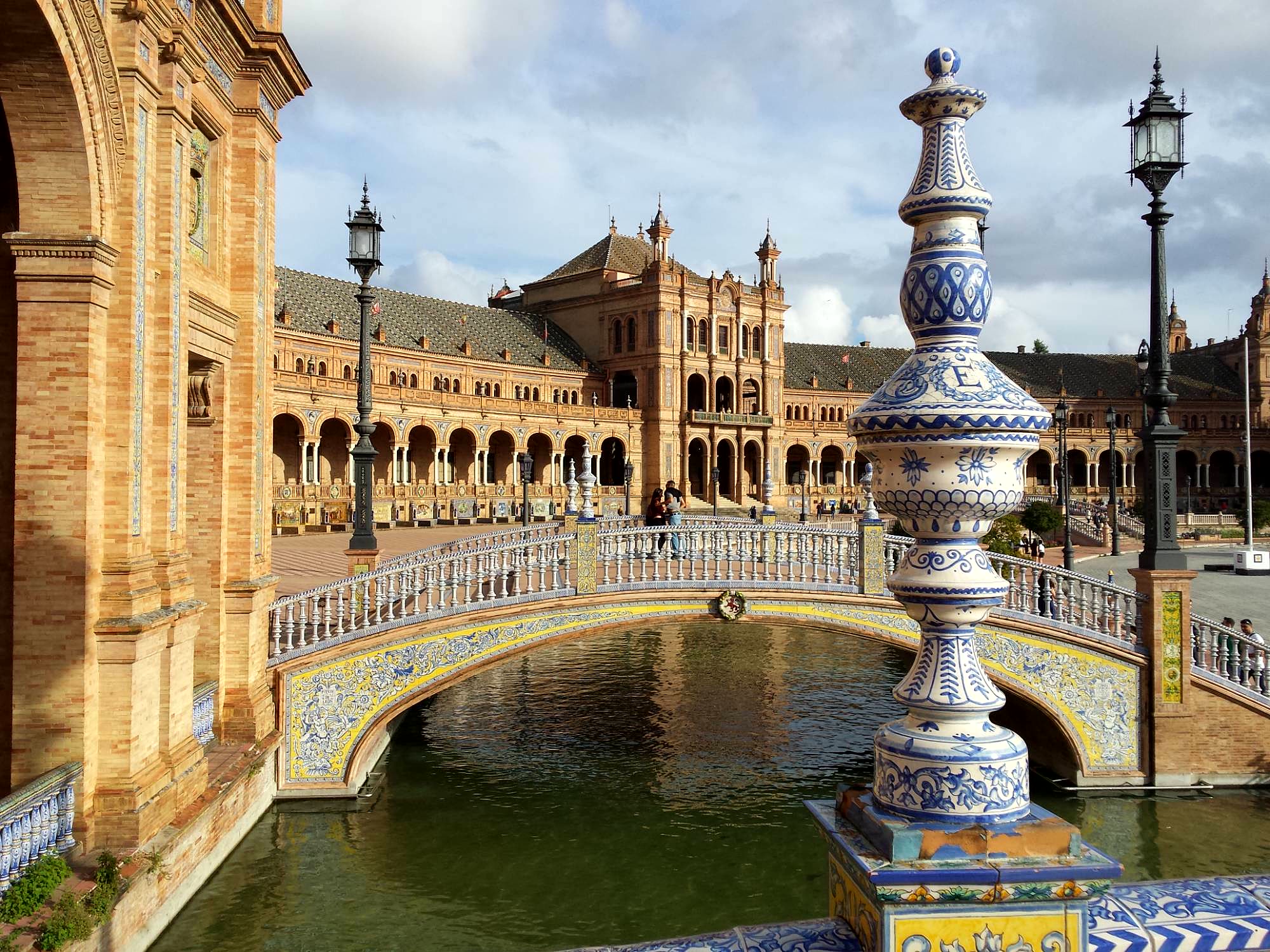
The Plaza de España. It is the great icon of Seville. It was built between 1914 and 1929 for the Ibero-American Exposition of 1929, to a design by the architect Aníbal González, inside María Luisa Park. It is semicircular, with a large building of exposed brick and ceramics that embraces the square and a canal with four bridges symbolising the old kingdoms of Spain. In this photo you can see the bridge covered in tiles with blue and white ceramic balusters, and in the background the central building, with its arcades and tiled roof. Along the wall there are tiled benches dedicated to each Spanish province, with a map and a historic scene of each. Entry is free.
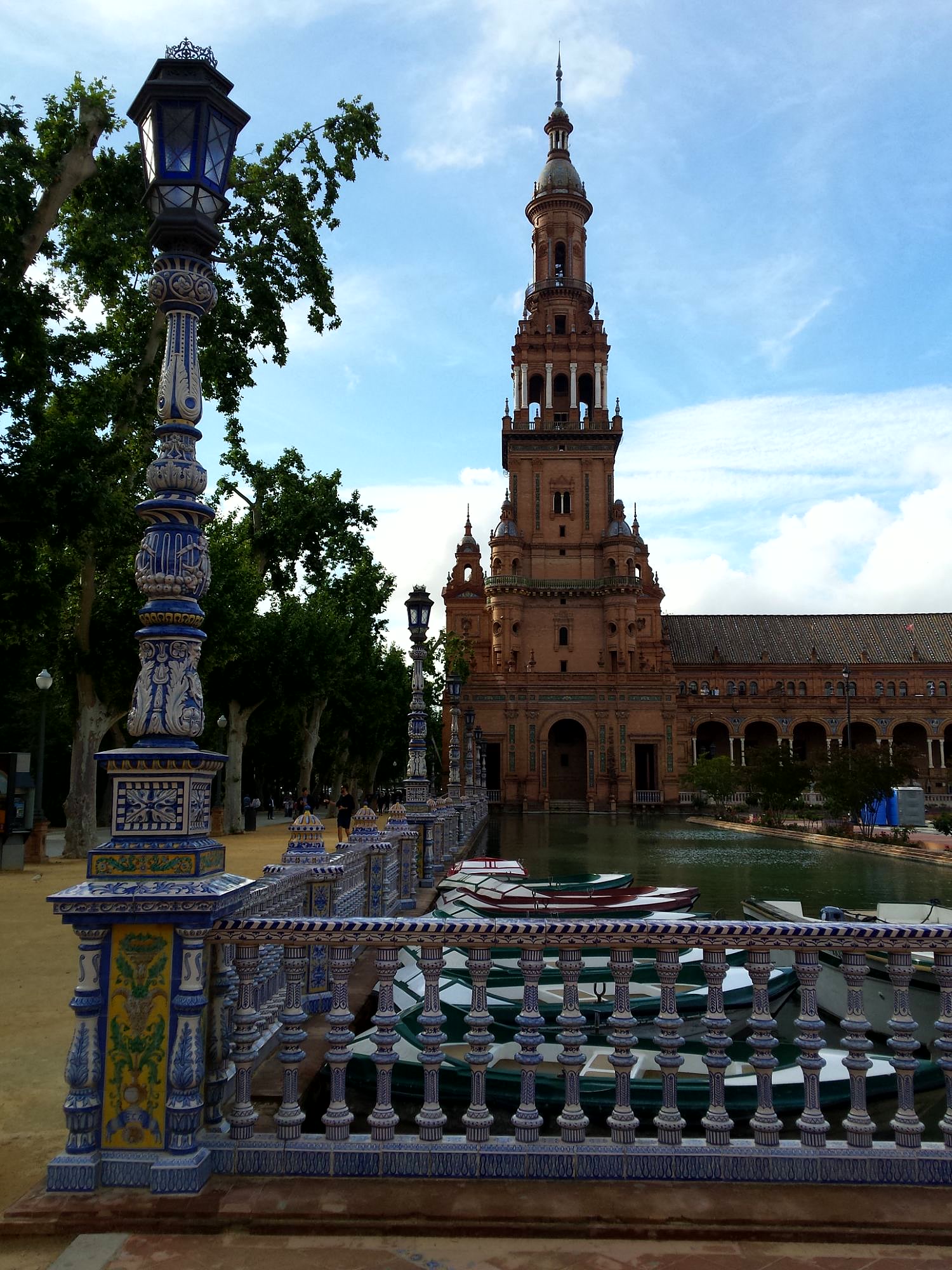
The towers and the ceramic railings. The two ends of the square are crowned by two towers about 74 metres high, Baroque and Renaissance in inspiration, made of reddish brick, with balconies and domes. In front, a railing of glazed ceramic balusters, with blue and white lamp posts, runs along the canal. It is a good spot to see how Mudéjar tradition, Triana tiles and regionalist architecture combine. In addition, you can rent small rowing boats on the canal, which you can see parked in the photo, to row around for a few minutes.
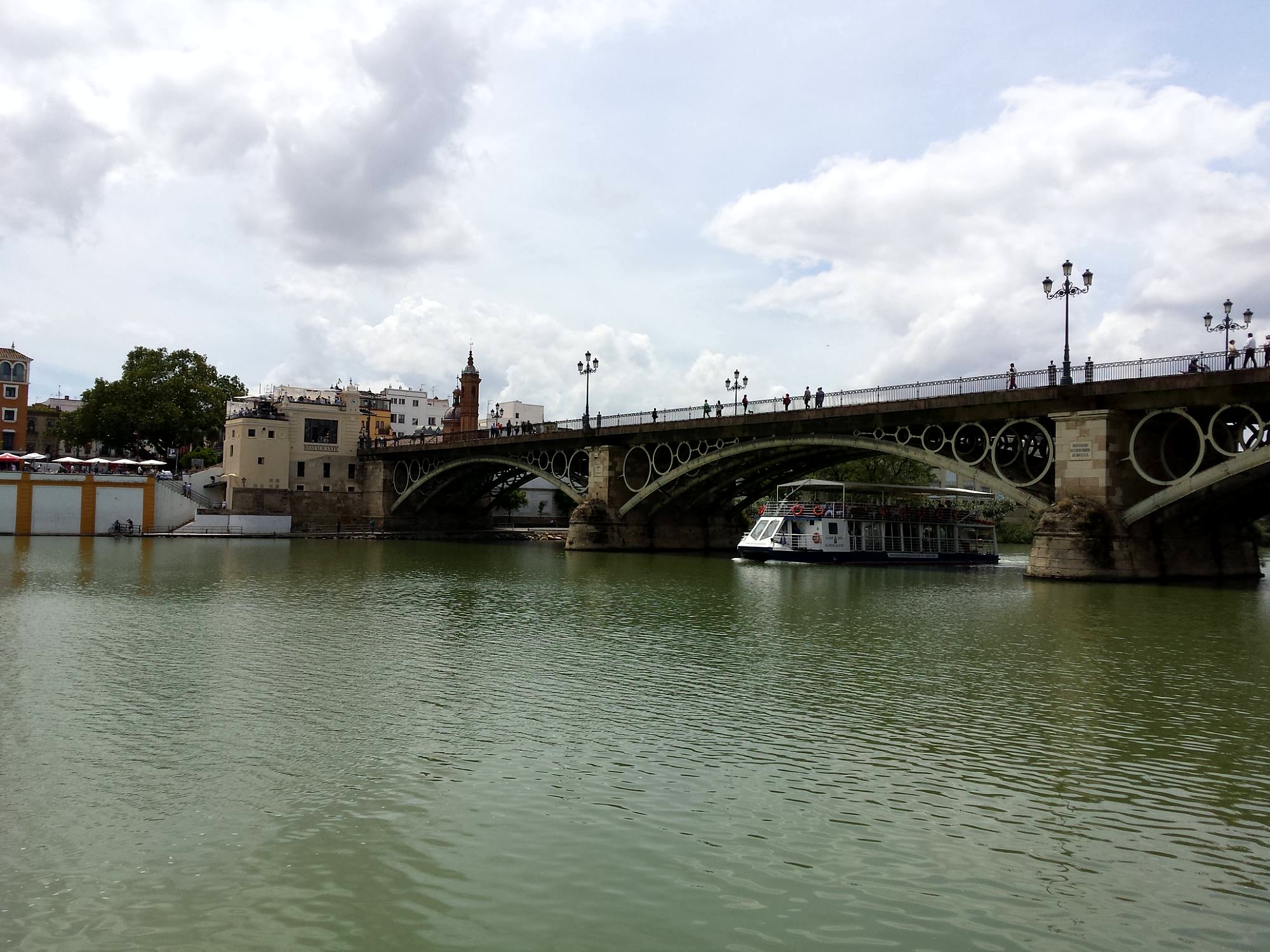
The Isabel II bridge and the Triana neighbourhood. Over the Guadalquivir, the Isabel II bridge, known as the Triana bridge, links the centre with the Triana neighbourhood. It is an iron structure opened in 1852, the oldest of its kind in Spain, and its arches with iron hoops give it a very distinctive look. Triana is the neighbourhood of sailors, potters and flamenco artists; today it is a very lively place, with bars, ceramics shops and restaurants on the riverbank. On the river there are tourist boats that make one-hour trips, and it is pleasant to walk along the banks of the Guadalquivir at sunset.
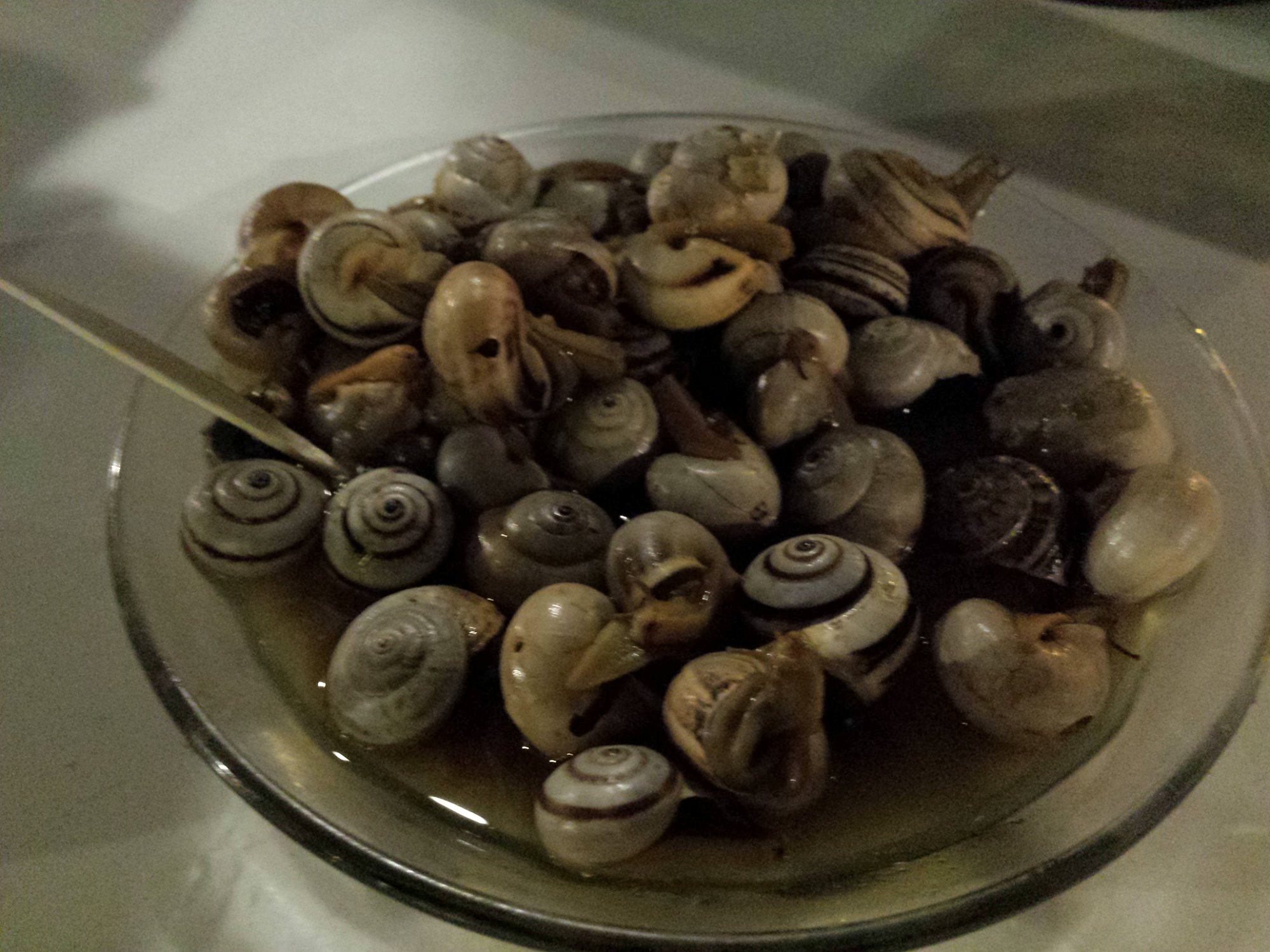
Snails, a seasonal tapa. In spring and summer it is typical to find snails on the bars of Seville, served in a bowl, in their broth with herbs, cumin, spearmint and chilli, and eaten with a toothpick. They are not to everyone's taste, but they are very popular among Sevillians and a way to try the most traditional cooking. They are ordered by portions and taken with a cold beer or a fino wine. The photo is dimly lit, since it was taken in a bar at night.
The Cathedral, the Giralda and the Royal Alcázar. Seville Cathedral is the largest Gothic cathedral in the world and holds the tomb of Christopher Columbus. Its bell tower, the Giralda, was originally the minaret of the 12th-century Almohad mosque; it is climbed by ramps, not stairs, and from the top there are excellent views. Opposite it stands the Royal Alcázar, a palace that mixes Mudéjar, Gothic and Renaissance styles, with courtyards, gardens and halls of great beauty, and which is still the official residence of the Royal Family when they travel to Seville. Very close, the Santa Cruz neighbourhood, the old Jewish quarter, is a maze of whitewashed streets and squares with orange trees.
What to eat. The tapas tradition is fundamental in Seville. To try: salmorejo and gazpacho, fried fish, spinach with chickpeas, oxtail, Iberian pork cheek, Iberian ham, cod pavías and shrimp fritters. For dessert, yemas de San Leandro or pestiños. To drink, very cold beer, tinto de verano or fino wine, and in spring rebujito during the Feria. Many bars have the counter full of people at aperitif time, so it is best to have your tapas standing and move from place to place.
Practical tips. (1) The best times are March to May and October and November: in July and August temperatures easily exceed 40 degrees. (2) Holy Week and the April Fair are the most important festivals, and you need to book accommodation well in advance. (3) The centre is pedestrianised and easy to explore on foot; there is also a public bicycle service, very practical in a flat city. (4) Bring water, a hat and sunscreen. (5) Dinners are late, from 21:00. (6) The Alcázar and the Cathedral have long queues in high season; it is better to get timed tickets. (7) Be careful with valuables in the most crowded areas.
Conclusion. Seville is a city to enjoy without hurry: its heritage, its courtyards, its river and its cuisine make it a complete destination. Three days let you see the essentials and, even so, there is still plenty to discover, from the white villages of the province to the Roman ruins of Italica.
Blog designed by
eru
What do you think about the blog? Please rate it.
Seville in 3 days: the Plaza de España, the Guadalquivir and the taste of Andalusian tapas
Sevilla
Why "Treep"?
Treep comes from the union of "Tree" and "Trip".
A tree grows deep roots while never stopping its upward, outward growth. That is how we think about travel: it is not just moving from one place to another, but also a journey back to our own roots, a way to reconnect with nature and with the people around us, and a path of personal growth that every trip leaves behind.
Treep was born to be part of that journey: a place to plan, share and keep the trips that help us grow, the same way a tree never stops reaching outward with its branches.